Every few years, a viral headline sweeps across social media declaring that astronomers have quietly rewritten the zodiac and that four out of five people have been reading the wrong horoscope their entire lives. Someone who has identified as a bold Leo suddenly discovers a birth chart calculator labeling them a Cancer, while a lifelong Capricorn finds themselves recast as a Sagittarius overnight. For readers newly exploring how to read a natal birth chart, that contradiction can feel disorienting enough to cast doubt on astrology altogether.
The truth behind the apparent contradiction is far less sensational and far more fascinating than clickbait claims suggest. Nothing broke in the sky, and no scientific body secretly altered astrological traditions. Instead, the confusion stems from mixing up three separate sky-mapping systems that share overlapping sign names yet measure completely different astronomical phenomena: the Tropical Zodiac used in mainstream Western astrology, the Sidereal Zodiac used in Indian Vedic (Jyotish) and Western sidereal astrology, and the Astronomical IAU Constellations formalized by modern astronomers for star cataloging.
Because Earth’s rotational axis wobbles gradually over tens of thousands of years—a physical motion called axial precession—the seasonal coordinate grid used by Tropical astrologers has slowly drifted roughly 24 degrees away from the star-referenced zodiac maintained by Sidereal astrologers. Understanding how that drift works resolves the “did my sign change?” debate permanently, clarifies how Sun, Moon, and Rising placements behave across both frameworks, and lets you appreciate each tradition on its own historical terms.
Tropical Zodiac vs. Sidereal Zodiac vs. Astronomical Constellations at a Glance
Before diving into orbital mechanics or historical calendars, it helps to separate the three systems cleanly side by side. One of the most persistent myths online is that Sidereal astrology simply uses the exact constellation shapes visible through a telescope. In reality, both Tropical and Sidereal astrology divide the 360-degree path of the Sun—known as the ecliptic—into twelve mathematically equal 30-degree sectors. Only the official International Astronomical Union (IAU) constellation map uses irregular, unequal star boundaries.
| Feature | Tropical Zodiac (Western) | Sidereal Zodiac (Vedic/Jyotish & Western Sidereal) | Astronomical IAU Constellations |
|---|---|---|---|
| Primary Reference Anchor | Earth–Sun seasonal geometry (0° Aries locked to the March Vernal Equinox) | Fixed background stars via an ayanamsha (e.g., Lahiri anchors 0° Libra to Spica) | Formalized telescopic regions of the celestial sphere (1928–1930 IAU borders) |
| Number of Ecliptic Divisions | 12 equal zodiac signs | 12 equal zodiac signs (Rashis in Jyotish) | 13 constellations crossed by the ecliptic (out of 88 total sky constellations) |
| Width of Each Division | Exactly 30° each (~30–31 days of solar travel) | Exactly 30° each (~30–31 days of solar travel) | Unequal widths (from ~7 days in Scorpius to ~44 days in Virgo) |
| Relationship to Axial Precession | Moves with the equinoxes; permanently aligned with seasons | Tracks the fixed stars; equinoxes precess backward through the signs | Fixed star patterns; equinox points drift steadily across star borders |
| Includes Ophiuchus? | No | No | Yes (~18 days, roughly November 29 to December 17) |
| Primary Cultural & Practical Role | Symbolic character reflection, seasonal cycles, psychological & traditional Western astrology | Vedic Jyotish (Nakshatras, Dashas, Moon/Lagna focus) and Western sidereal analysis | Scientific astronomy, deep-sky coordinates, and astronomical navigation |
Looking closely at that comparison reveals why so many online arguments talk right past one another. A Tropical astrologer is measuring the relationship between Earth’s axial tilt and sunlight throughout the solar year. A Sidereal astrologer is measuring planetary longitude against a fixed stellar coordinate frame—and in Indian tradition, pairing those twelve equal signs with twenty-seven lunar mansions called Nakshatras. An astronomer referencing IAU boundaries is charting physical stars across three-dimensional space without attributing symbolic meaning to them at all.
The Astronomy of Axial Precession and the Meaning of Ayanamsha
To grasp why two 360-degree zodiacs that once largely agreed now sit nearly a full sign apart, we have to look at the subtle wobble of our own planet. Earth does not spin upright like a perfectly balanced marble; it tilts at roughly 23.4 degrees relative to its orbital plane around the Sun, and it bulges slightly around the equator due to its daily rotation.
Earth’s 25,772-Year Wobble Explained
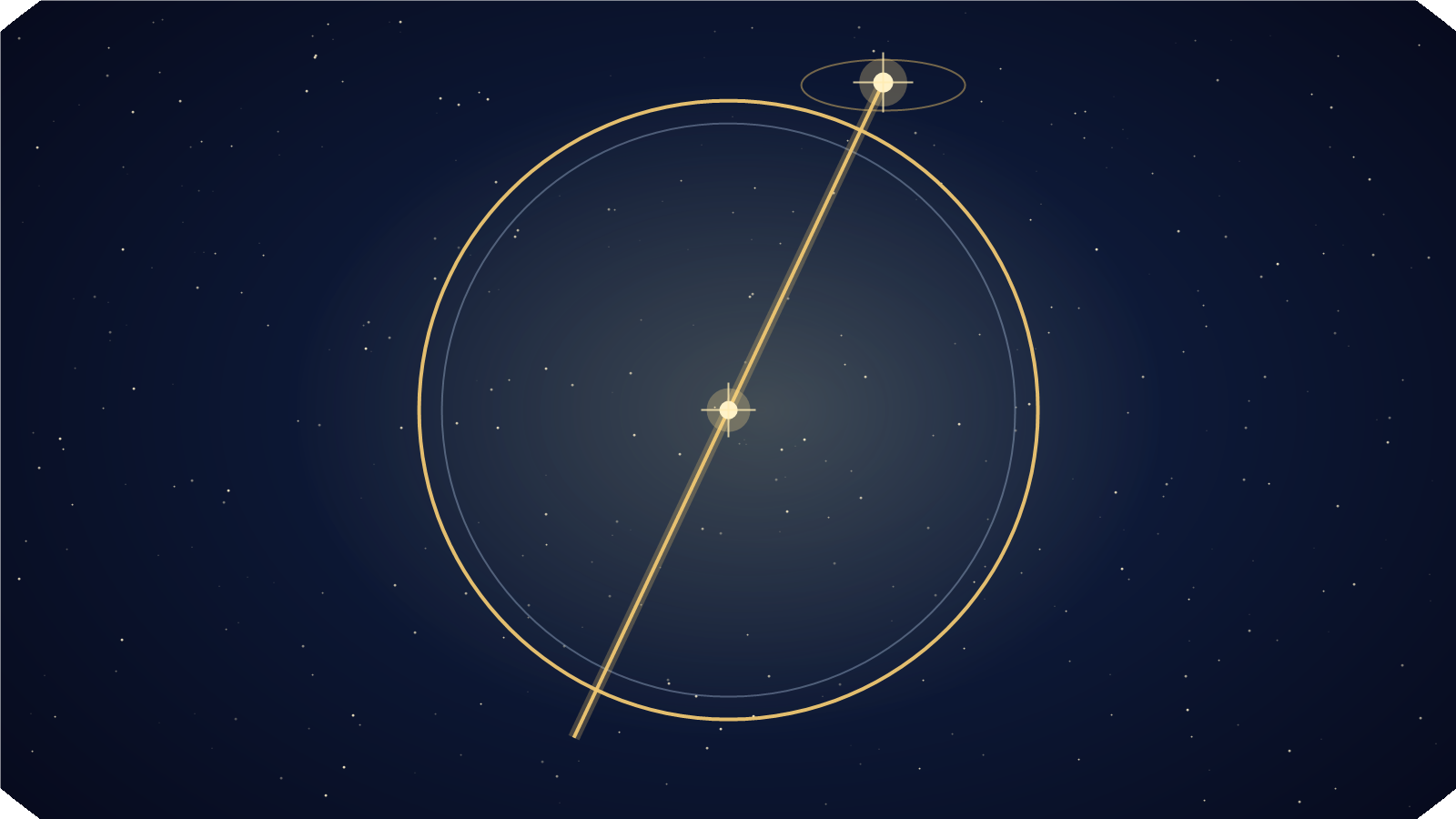
As Earth orbits the Sun, the gravitational pull of both the Sun and the Moon tugs gently on that equatorial bulge, trying to pull the tilted planet upright. Because Earth is spinning rapidly, it responds the exact same way a tilted spinning top responds to gravity: its rotational axis traces a slow, sweeping cone across the starry sky. Astronomers call this conical drift the precession of the equinoxes, or axial precession.
One complete circuit of this axial wobble takes approximately 25,772 years (often rounded to 25,800 years in introductory astronomy texts). That translates into a slow retrograde shift of roughly 50.3 arcseconds per year along the ecliptic. Over a single human lifespan of roughly 71.6 years, the March Vernal Equinox point slides backward by one full degree against the backdrop of distant stars. Across approximately 2,148 years, the equinox drifts through an entire 30-degree sector—the astronomical rhythm behind the well-known cultural concept of “astrological ages,” such as the long, gradual transition from the Age of Pisces toward the Age of Aquarius.
Ancient skywatchers noticed this drift long before modern telescopes existed. In the Mediterranean world, the Greek astronomer Hipparchus of Nicaea documented the precession of the equinoxes around the second century BCE by comparing his own star measurements against earlier Babylonian and Alexandrian records. Roughly two millennia ago—around the era when Hellenistic Western astrology and classical Indian mathematical astronomy were crystallizing into systematic texts—the March Vernal Equinox point aligned closely with the stars marking the start of Sidereal Aries. Back then, the seasonal zodiac and the stellar zodiac essentially overlapped.
You can also observe axial precession in the night sky without looking anywhere near the zodiac: it gradually changes which star serves as Earth’s North Star. When Egyptian architects aligned the Great Pyramid of Giza around 2600 BCE, Earth’s northern rotational axis pointed near the dim star Thuban in the constellation Draco. Today our axis aims closely toward Polaris in Ursa Minor, and roughly twelve thousand years from now it will point toward brilliant blue-white Vega in Lyra. The very same gravitational wobble that rotates our pole stars over twenty-five millennia steadily slides the seasonal equinoxes past the zodiac constellations.
What Is an Ayanamsha and Why Do Sidereal Calculations Vary Slightly?
Two thousand years of continuous precession have opened a measurable angular gap between the seasonal starting point (0° Tropical Aries) and the star-anchored starting point (0° Sidereal Aries). In Indian astronomy and Jyotish, that exact longitudinal gap is called the ayanamsha—a Sanskrit compound combining ayana (movement or solstitial path) and amsha (portion or component).
During the 2020s, the most widely used standard—the Lahiri (Chitra Paksha) ayanamsha—sits at approximately 24 degrees and 13 arcminutes (slowly inching upward by about 50.3 arcseconds annually). Adopted officially by the Indian Calendar Reform Committee in 1955 under the guidance of physicist Meghnad Saha and astronomer N. C. Lahiri, this benchmark anchors 0° Sidereal Libra (180° longitude) directly to the luminous blue-white star Spica, known in Sanskrit as Chitra. Placing Spica cleanly at the opening degree of Sidereal Libra automatically defines 0° Sidereal Aries directly opposite at 0° longitude, with the two zodiacs having coincided around the year 285 CE under this model.
Because stars do not come with painted boundary lines in space, sidereal scholars across history have occasionally debated the exact zero-point star. That is why advanced software offers multiple ayanamsha choices:
- Lahiri (Chitra Paksha, ~24°13′ in the 2020s): The overwhelming standard across modern Indian Vedic astrology, national almanacs (Panchangas), and most mainstream Jyotish software.
- Fagan–Bradley (~25°02′ in the 2020s): Developed by twentieth-century Western siderealists Cyril Fagan and Donald Bradley using ancient Babylonian lunar-occultation records; it sits nearly one full degree wider than Lahiri.
- Raman (~22°46′ in the 2020s): Popularized by renowned twentieth-century Indian astrologer B. V. Raman, placing the zero-coincidence year later in history and sitting roughly 1.5 degrees narrower than Lahiri.
- Krishnamurti / KP (~24°07′ in the 2020s): A slight refinement of Lahiri used within the specialized Krishnamurti Paddhati predictive framework.
If you ever run your birth data through two different sidereal websites and notice a planet shifting across a sign border by a hair, the ayanamsha setting is almost always the culprit. Knowing which standard a calculator uses prevents needless confusion when studying boundary degrees.
Tropical vs. Sidereal Zodiac Date Ranges and Vedic Rashi Names
Because converting a Tropical chart to a Lahiri Sidereal chart subtracts roughly 24 degrees and 13 arcminutes from every celestial position, the Sun enters each Sidereal sign roughly 24 days later in the calendar year than it enters the corresponding Tropical sign. In practical terms, anyone born during the first 24 days of a Tropical sign shifts backward into the preceding sign in Sidereal astrology, while anyone born during the final five or six days retains the exact same sign across both systems.
Below is the complete twelve-sign comparison showing standard Western sign names, traditional Sanskrit Rashi names used in Jyotish, approximate Tropical date windows, approximate Sidereal (Lahiri) date windows, and each sign’s shared classical element and modality. Remember that exact ingress dates vary by a day from year to year due to leap years and time zones.
| Western Sign | Vedic Rashi (Sanskrit) | Approximate Tropical Dates | Approximate Sidereal Dates (Lahiri) | Element & Modality |
|---|---|---|---|---|
| Aries | Mesha | March 21 – April 19 | April 14 – May 14 | Fire / Cardinal |
| Taurus | Vrishabha | April 20 – May 20 | May 15 – June 14 | Earth / Fixed |
| Gemini | Mithuna | May 21 – June 20 | June 15 – July 16 | Air / Mutable |
| Cancer | Karka (Karkata) | June 21 – July 22 | July 17 – August 16 | Water / Cardinal |
| Leo | Simha | July 23 – August 22 | August 17 – September 16 | Fire / Fixed |
| Virgo | Kanya | August 23 – September 22 | September 17 – October 17 | Earth / Mutable |
| Libra | Tula | September 23 – October 22 | October 18 – November 16 | Air / Cardinal |
| Scorpio | Vrishchika | October 23 – November 21 | November 17 – December 15 | Water / Fixed |
| Sagittarius | Dhanu (Dhanus) | November 22 – December 21 | December 16 – January 14 | Fire / Mutable |
| Capricorn | Makara | December 22 – January 19 | January 15 – February 12 | Earth / Cardinal |
| Aquarius | Kumbha | January 20 – February 18 | February 13 – March 14 | Air / Fixed |
| Pisces | Meena | February 19 – March 20 | March 15 – April 13 | Water / Mutable |
Notice an important consequence of that 24-degree offset: switching systems does not merely relabel your Sun sign. Your Ascendant (Rising sign), Moon, Mercury, Venus, Mars, Jupiter, Saturn, and outer planets all slide backward by the exact same ~24-degree margin. Someone born on October 10 has a Tropical Libra Sun yet holds a Sidereal Virgo (Kanya) Sun—and if their Tropical Ascendant stood at 12° Scorpio, their Sidereal Ascendant becomes roughly 18° Libra.
That uniform shift also reorganizes elemental and modal balance across the entire horoscope. A person whose Tropical chart clusters heavily in cardinal Air and Fire—studied through the four classical elements and cardinal, fixed, and mutable modalities—frequently discovers a strong Mutable Earth or Fixed Water emphasis in Sidereal notation. Because every zodiac sign carries distinct elemental temperament and rhythmic pacing, learning why each system anchors its starting line differently is essential before judging which chart feels truer.
Consider a concrete illustration to see the conversion in action. Suppose someone’s Tropical chart places their Sun at 18° Taurus, their Moon at 27° Leo, and their Rising sign at 9° Aquarius. Subtracting a 24°13′ Lahiri ayanamsha yields a Sidereal Sun at roughly 23°47′ Aries (Mesha), a Sidereal Moon at roughly 2°47′ Leo (Simha), and a Sidereal Ascendant at roughly 14°47′ Capricorn (Makara). Notice how the Moon remains in Leo because it started in the final six degrees of the Tropical sign, whereas both the Sun and Ascendant step back one sign—yet the tense square geometry separating the Sun from the Ascendant remains completely intact.
Why Tropical Astrology Works on Seasons While Sidereal Works on Stars
Skeptics sometimes argue that Tropical astrology must be “outdated” because the March equinox Sun now appears in front of the stars of Pisces rather than Aries. Conversely, Western enthusiasts occasionally dismiss Sidereal charts because the Sun enters Sidereal Aries in mid-April instead of on the first day of spring. Both criticisms misunderstand the foundational philosophy built into each lineage.
The Seasonal Architecture of the Tropical Zodiac
Western astrology did not accidentally lose track of the stars. In the second century CE, Claudius Ptolemy—author of both the landmark astronomical treatise Almagest and the foundational astrological manual Tetrabiblos—knew about axial precession from Hipparchus’s work and made a deliberate theoretical choice. Ptolemy argued that planetary influence on terrestrial life operates through the shifting balance of heat, cold, moisture, and dryness generated by the Earth–Sun seasonal cycle, not through distant fixed stars whose shapes are optical illusions from our vantage point.
Under Ptolemy’s seasonal logic, the twelve Tropical signs represent twelve distinct phases of the solar year anchored to the four cardinal turning points:
- Aries (March Vernal Equinox): Daylight overtakes darkness in the Northern Hemisphere, symbolizing raw ignition, sprouting energy, and bold initiation.
- Cancer (June Solstice): Daylight reaches its annual summit before turning inward, symbolizing peak nourishment, shelter, and protective tides.
- Libra (September Equinox): Light and darkness achieve momentary equilibrium before lengthening nights take over, symbolizing relational balance, justice, and partnership.
- Capricorn (December Solstice): Darkness peaks and solar light begins its disciplined climb back upward, symbolizing endurance, structure, and long-range mastery.
Each seasonal arc follows an organic three-stage rhythm: Cardinal signs spark the season, Fixed signs (Taurus, Leo, Scorpio, and Aquarius) anchor and sustain its core climate, and Mutable signs (Gemini, Virgo, Sagittarius, and Pisces) dissolve the outgoing season to prepare for the next transition. Because the Tropical zodiac derives its meaning directly from solar declination and seasonal light cycles, precession cannot invalidate it. Even Southern Hemisphere Western astrologers generally maintain this classical symbolic coordinate grid as a unified mathematical zodiac rather than inverting the wheel, treating the Northern seasonal cycle as the archetypal origin story of the symbols.
The Stellar Depth and Specialized Toolkit of Vedic (Jyotish) Astrology
Equally important, Indian Vedic astrology—traditionally called Jyotish, meaning “science of light”—is not simply Western astrology pushed backward by twenty-four degrees. Trying to read a Sidereal chart using popular Western Sun-sign tropes misses the entire interpretive engine that makes Jyotish uniquely powerful.
First, Jyotish places far greater emphasis on the Moon sign (Chandra Rashi) and the Ascendant (Lagna) than on the Sun sign. In Vedic thought, the Moon represents the lived emotional mind (Manas), perceptual habits, and inner well-being, whereas the Sun signifies vitality, authority, and soul purpose. When someone living in India asks for your zodiac sign, they are almost always asking for your sidereal Moon sign rather than your Solar birthday month.
Second, Sidereal Jyotish overlays a remarkably detailed 27-part stellar division directly on top of the twelve signs: the Nakshatras, or lunar mansions. Each Nakshatra spans exactly 13 degrees and 20 arcminutes of the sidereal ecliptic (27 × 13°20′ = 360°) and links directly to specific marker stars—such as radiant Aldebaran in Rohini, regal Regulus in Magha, or fiery Antares in Jyeshtha. Because the Moon travels roughly one Nakshatra per day, your natal Moon Nakshatra imparts subtle mythological nuance that frequently explains why two people sharing the same sign feel worlds apart.
Third, Jyotish uses timing systems entirely distinct from standard Western transits—most famously the Vimshottari Dasha system, which maps a 120-year sequence of planetary chapters beginning from the exact degree of the natal Moon, alongside harmonic divisional charts called Vargas (such as the Navamsha or D9 chart used for evaluating marriage and spiritual maturity). Meanwhile, a separate twentieth-century branch known as Western Sidereal astrology blends sidereal sign coordinates with Western geometric aspects, Placidus or Campanus houses, and modern outer planets like Uranus, Neptune, and Pluto.
History also confirms that both schools chose their starting points consciously rather than by oversight. Along ancient silk and maritime trade routes linking Alexandria to western India during the early centuries of the Common Era, Hellenistic horoscopic techniques mingled richly with indigenous Indian lunar astronomy—documented in Sanskrit adaptations such as the Yavanajataka. Yet Mediterranean scholars ultimately prioritized Ptolemy’s seasonal equinox anchor, whereas Indian lineages preserved alignment with the ancient Vedic Nakshatras rooted in visible stars. Rather than representing a “correct” version and a “corrupted” copy, Tropical and Sidereal astrology represent two mature architectural branches grown from a shared classical root.
The Ophiuchus Fact-Check: Why NASA Did Not Add a 13th Zodiac Sign
No conversation about Tropical versus Sidereal astrology is complete without clearing up the recurring rumor about Ophiuchus, the “Serpent Bearer.” Every couple of years, viral posts resurface claiming that NASA altered everyone’s zodiac sign in 2016 and officially added a thirteenth sign between Scorpio and Sagittarius.
Here is what actually happened. In 2016, NASA’s Space Place—an educational web portal designed to teach elementary and middle school students basic astronomy—published a short article explaining the difference between astronomy (empirical space science) and astrology (an ancient cultural belief system). As an astronomical illustration, the article pointed out two textbook facts: axial precession has shifted the constellations since Babylonian antiquity, and the Sun’s apparent path along the ecliptic actually crosses thirteen official IAU constellations, passing through the southern foot of Ophiuchus for roughly eighteen days each year (approximately November 29 to December 17).
Tabloid outlets immediately spun that science lesson into sensational “NASA changed your horoscope!” headlines—prompting NASA spokespeople to issue follow-up statements explicitly reminding the public that astronomers do not manage, alter, or endorse zodiac signs. Even more revealing are the historical and mathematical facts behind Ophiuchus:
- Ancient Babylonians already knew about Ophiuchus: Mesopotamian skywatchers mapped the Serpent Bearer more than 2,500 years ago and deliberately omitted it when formalizing the twelve-sign zodiac around the fifth century BCE so the 360-degree ecliptic would divide cleanly into twelve symmetrical 30-degree sectors mirroring the twelve lunar cycles of the calendar year.
- IAU borders were drawn in 1928–1930 for telescopes, not horoscopes: The International Astronomical Union established 88 rectangular-edged constellation zones solely so astronomers worldwide could catalog stars and galaxies unambiguously.
- Constellation sizes are wildly uneven: Along those official IAU lines, the Sun spends roughly 44 days crossing Virgo, about 38 days traversing Taurus and Pisces, approximately 18 days passing through Ophiuchus, and a mere 7 days skimming the northern claws of Scorpius.
- Neither mainstream Western nor Vedic astrology uses Ophiuchus: Both the Tropical and Sidereal traditions retain twelve equal 30-degree signs. Only a very small contemporary niche known as “true sidereal” or “13-sign astrology” experiments with uneven IAU star boundaries.
In short, you do not have to abandon Scorpio or Sagittarius because of a NASA kids’ blog post. Ophiuchus is a real, visually striking astronomical constellation—and a fascinating mythological figure associated with the Greek healer Asclepius—yet it has never belonged to the traditional twelve-sign Tropical or Sidereal zodiacs.
How to Explore Both Your Tropical and Sidereal Charts Without Confusion
Once readers realize that neither system is “fake,” the next practical question naturally follows: should you pick one zodiac and ignore the other, or can you study both? Many seasoned astrologers explore both frameworks productively—provided they follow clear methodological hygiene instead of mashing rules together randomly.
- Keep each tradition’s interpretive toolkit intact: When examining your Tropical chart, apply Western seasonal archetypes, modern and traditional rulerships, and Western aspect patterns. When examining your Sidereal chart, step into the Jyotish lens—prioritize your Sidereal Ascendant (Lagna), Moon Rashi, Moon Nakshatra, and current Dasha period rather than pasting pop-Western Sun-sign stereotypes onto a Vedic grid.
- Look beyond the Sun sign alone: Someone who initially feels alienated by a Sidereal Sun shift often experiences an immediate moment of recognition upon reading their Sidereal Moon Nakshatra or Ascendant. A Tropical Leo Sun with a sensitive Water Moon, for instance, may find that their Sidereal Cancer Sun mirrors the exact private emotional warmth they always sensed beneath their outward confidence.
- Notice how planetary strengths shift across zodiacs: Changing sign boundaries alters planetary rulers and essential dignities—meaning a planet that sits in Domicile or Exaltation in your Tropical chart may operate in an entirely different sign in your Sidereal chart, offering two complementary perspectives on how you access that planet’s energy.
- Check your exact birth time and cusp degrees: If you were born near the 19th–23rd of a month (Tropical transitions) or the 13th–17th of a month (Sidereal transitions), approximate date tables cannot confirm your sign. An exact birth time and city allow software to calculate true solar longitude down to the arcminute.
- View the two charts as different maps of the same terrain: A topographic elevation map and a highway transit map depict the exact same region while highlighting different realities. Neither map invalidates the other; each simply answers a distinct set of questions about your inner landscape and life rhythms.
Approached this way, comparing your Tropical and Sidereal horoscopes stops feeling like an identity crisis and starts functioning like holding two finely cut prisms up to the same beam of light. Many readers discover that Tropical astrology articulates their outward seasonal temperament and psychological development vividly, while Sidereal Jyotish illuminates recurring life chapters, deep emotional instincts, and spiritual inclinations with uncanny clarity.
Frequently Asked Questions About Tropical and Sidereal Astrology
Why do some people keep the exact same Sun sign in both Tropical and Sidereal astrology?
Because the Lahiri ayanamsha subtracts roughly 24 degrees and 13 arcminutes from every Tropical position, anyone whose Tropical Sun sits in the final five to six degrees of a sign—between roughly 24°14′ and 29°59’—lands in the opening zero to five degrees of that very same sign once converted to Sidereal coordinates. Roughly twenty percent of the population shares identical Tropical and Sidereal Sun signs for this straightforward mathematical reason.
Do planetary aspects like trines, squares, and oppositions change between Tropical and Sidereal charts?
No. Because an ayanamsha shifts every single celestial body backward by the exact same angular constant, the geometric distance between any two planets in your natal chart remains 100 percent unchanged. If your Venus forms an exact 90-degree square to Saturn or a flowing 120-degree trine to Jupiter in your Tropical chart, that exact same geometric relationship appears in your Sidereal chart—only the zodiacal backdrop behind the pair changes.
Does Western Tropical astrology ignore fixed stars completely?
Not at all. Classical and traditional Western astrologers have tracked prominent fixed stars—such as Regulus, Spica, Aldebaran, and Antares—for centuries by updating their Tropical zodiac coordinates as they slowly precess forward at roughly one degree every 71.6 years. For example, Regulus (the “Heart of the Lion”) precessed out of Tropical Leo and crossed into 0° Tropical Virgo around 2011–2012, an astronomical milestone closely watched by traditional Western astrologers.
How does the Tropical versus Sidereal difference affect romantic compatibility readings?
In serious zodiac compatibility analysis, inter-chart planetary aspects—such as how one partner’s Moon or Venus placement angles toward the other partner’s planets—carry enormous weight, and those exact geometric aspects stay identical across both zodiacs. What changes is the interpretive framework: Western synastry emphasizes elemental harmony and psychological planetary aspects, whereas Vedic marriage matching (Ashtakoota or Kundali Milan) compares the pair’s Sidereal Moon Nakshatras across eight traditional compatibility metrics.
Why did the Lahiri ayanamsha become the primary standard in Vedic astrology?
Prior to the mid-twentieth century, regional Indian almanac makers used dozens of slightly divergent local calculations, causing festival dates and planetary tables to vary from state to state. In 1955, the Government of India’s Calendar Reform Committee—led by astrophysicist Meghnad Saha alongside astronomer N. C. Lahiri—standardized national calculations around the Chitra Paksha (Spica-anchored) reference frame, creating a transparent, astronomically verifiable benchmark that most Jyotish schools adopted worldwide.
Will the Tropical and Sidereal zodiacs ever line up again?
Yes, eventually—just not anytime soon! Because the gap between 0° Tropical Aries and 0° Sidereal Aries is currently widening past 24 degrees on a 25,772-year cycle, the two starting points will not coincide again for roughly 24,000 years. Along the way, however, 0° Tropical Aries will pass cleanly through 0° Sidereal Pisces in a few centuries, followed millennia later by 0° Sidereal Aquarius and each preceding sign around the wheel.
Can I read standard Western monthly horoscopes using my Sidereal Sun sign?
Doing so usually produces confusing results. Western horoscope columns calculate real-time planetary ingresses, eclipses, and house transits using the Tropical zodiac—meaning a column written for “Taurus” tracks how Tropical transits activate the Tropical Taurus house structure. To get coherent insights, always match Tropical forecasts to your Tropical placements (especially your Tropical Rising sign) and Sidereal forecasts to your Sidereal placements (especially your Sidereal Moon and Lagna).
Cultural and Reflective Note: Both Tropical Western astrology and Sidereal Vedic astrology are rich historical, cultural, and symbolic frameworks designed for personal reflection and storytelling rather than empirical sciences. Neither system determines fixed fate or replaces qualified medical, financial, or legal advice.