
While your Sun sign illuminates core identity and your Moon sign mirrors instinctive emotional security, your Venus sign reveals the subtle magnetism guiding how you give affection, savor beauty, and decide what deserves your devotion. In Western astrology, Venus acts as the planetary diplomat of connection—governing not only romantic chemistry and flirtation, but also aesthetic taste, friendship chemistry, creative pleasure, and the personal values that anchor everyday spending and lifestyle choices.
Understanding how Venus operates alongside the luminaries deepens everything you learn from Sun, Moon, and Rising signs explained. Throughout this guide, placements follow the Western Tropical Zodiac, which measures twelve equal 30-degree seasonal sectors beginning at the Vernal Equinox (0° Aries). Because Earth’s axial precession slowly shifts the background astronomical constellations by roughly 23 to 24 degrees relative to the seasons, your Tropical Venus sign often differs by one sign from your Sidereal or Vedic Shukra Rashi placement—a normal distinction between seasonal and star-based frameworks rather than a contradiction.
Astronomical and Astrological Foundations of Venus
Before interpreting Venus symbolically, grasping its real celestial mechanics resolves one of the most common puzzles beginners encounter when studying how to read your birth chart: why certain Sun-and-Venus combinations exist in abundance while others are astronomically impossible.
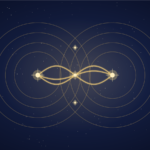
Venus orbits the Sun inside Earth’s orbital path, completing one full revolution in roughly 224.7 Earth days (about 225 days). Because both Earth and Venus are in motion, the synodic cycle—the interval between successive Earth-Sun-Venus alignments—spans approximately 584 days, or just over nineteen months. Over an eight-year span, five synodic cycles trace a remarkably symmetrical five-pointed rose geometry around the zodiac, a pattern observed since ancient Mesopotamian sky-watching.
Because Venus’s orbit lies closer to the Sun than Earth’s, viewers on Earth never see Venus stray more than roughly 47 to 48 degrees away from the Sun along the ecliptic—its maximum solar elongation. Astrologically, this produces a firm geometric boundary: your Venus sign can only fall in your Sun sign, one sign ahead or behind, or two signs ahead or behind. A person born with the Sun in Leo, for instance, can only hold Venus in Gemini, Cancer, Leo, Virgo, or Libra—never in Capricorn or Pisces. This natural proximity explains why Venus frequently modifies or softens the raw expression of your Sun sign.
Morning Star vs. Evening Star Venus
Ancient Babylonian astrologers revered Venus as the twin-faced goddess Inanna (later Ishtar), while classical Greek writers distinguished between Phosphorus (the dawn-bringer, rendered Lucifer in Latin) and Hesperus (the dusk-bringer). You can check which face appears in your chart by comparing Venus’s zodiac degree to your Sun’s degree:
- Morning Star (Oriental Venus): Positioned at an earlier zodiac degree than the Sun, rising above the eastern horizon before dawn. Traditionally associated with candid, pioneering affection, brisk social initiative, and a direct willingness to pursue what inspires desire.
- Evening Star (Occidental Venus): Positioned at a later zodiac degree than the Sun, shining in the western sky after sunset. Associated with deliberate aesthetic refinement, receptive warmth, diplomatic poise, and a reflective approach to cultivating intimacy over time.
Venus Essential Dignities: Domicile, Exaltation, Detriment, and Fall
Hellenistic and Renaissance astrologers developed a system called essential dignity to describe how naturally a planet accesses familiar tools within a given zodiac sign. Think of dignity like hospitality: some signs feel like Venus’s own living room or a favorite retreat, whereas others operate like unfamiliar terrain requiring resourcefulness and adaptation. Essential dignity never labels someone a “good” or “bad” partner; instead, it explains whether Venus expresses affection smoothly through conventional channels or through sharper, more specialized instincts.
| Dignity Status | Zodiac Sign | Classical Rationale | Core Relational Expression |
|---|---|---|---|
| Domicile (Nocturnal / Earth) | Taurus | Venus rules Taurus as its tangible, sensory home | Steadfast loyalty, tactile affection, patience, and deep appreciation for physical comfort |
| Domicile (Diurnal / Air) | Libra | Venus rules Libra as its relational, aesthetic home | Graceful diplomacy, balanced reciprocity, artistic taste, and social harmony |
| Exaltation | Pisces (27°) | Venus is an honored guest in Jupiter’s boundless Water sign | Unconditional empathy, poetic romance, forgiveness, and imaginative devotion |
| Detriment | Aries | Opposite Libra; ruled by assertive Mars | Bold pursuit, invigorating honesty, fierce autonomy, and electric spontaneity |
| Detriment | Scorpio | Opposite Taurus; traditionally ruled by Mars (modern co-ruler Pluto) | Unwavering depth, magnetic focus, transformative trust, and all-or-nothing devotion |
| Fall | Virgo (27°) | Opposite Pisces; ruled by analytical Mercury | Discerning standards, attentive practical care, quiet craftsmanship, and reliable service |
Reading detriment and fall placements without fatalism reveals why they often shine brightly in real relationships. Venus in Aries strips away passive-aggressive games in favor of refreshing candor; Venus in Scorpio delivers fierce emotional loyalty that refuses superficiality; Venus in Virgo remembers your dietary preferences, fixes the loose hinge before you ask, and proves care through meticulous daily thoughtfulness. Every dignity simply signals a distinctive strategy for building love.
Venus Through All 12 Zodiac Signs
Each zodiac sign colors Venus with a unique blend of element, modality, and planetary rulership. Exploring your specific placement illuminates what draws your eye, how you signal interest, and which relational blind spot invites conscious maturity.
Venus in Aries
Direct, lively, and allergic to tepid politeness, Venus in Aries falls in love like striking a match. You prefer unmistakable signals, spirited banter, and partners who meet your enthusiasm with equal courage and independence. The thrill of discovery fuels your affection, making shared adventures far more seductive than predictable routines. Your growth edge lies in savoring the quieter chapters after the initial chase—discovering that sustained intimacy can remain exhilarating without manufacturing fresh drama.
Venus in Taurus
Anchored in one of its home domiciles, Venus in Taurus expresses devotion through all five senses: warm touch, unhurried meals, comforting textures, and rock-solid dependability. You take your time deciding whom to trust, yet once committed, your loyalty endures through shifting seasons. Predictability feels soothing rather than dull, and you naturally invest in enduring beauty over fleeting trends. Your growth edge is loosening possessiveness and staying open to healthy change when a relationship evolves beyond familiar habits.
Venus in Gemini
Curiosity is your primary aphrodisiac. Venus in Gemini gravitates toward sharp wit, playful texting, eclectic playlists, and partners who never run out of intriguing questions. Monotony drains your spark faster than disagreement ever could, so intellectual variety and social freedom sit near the top of your relationship priorities. Your growth edge involves lingering inside vulnerable emotional conversations long enough to feel them fully instead of pivoting immediately into clever analysis or lighthearted distraction.
Venus in Cancer
Protective, nostalgic, and deeply tender, Venus in Cancer equates love with emotional sanctuary. You show care by remembering small milestones, cooking favorite comfort dishes, and creating an intimate domestic haven shielded from outside noise. Because rejection stings acutely, you often test the waters sideways before revealing the full breadth of your heart. Your growth edge is voicing unspoken expectations clearly rather than retreating into your shell and hoping a partner intuits what went wrong.
Venus in Leo
Radiant, theatrical, and fiercely generous, Venus in Leo treats romance as a celebration worth dressing up for. You adore grand gestures, heartfelt praise, warm physical pride, and creative playfulness that makes your partner feel singular and treasured. When you love someone, you champion their ambitions publicly and defend them wholeheartedly. Your growth edge is separating genuine mutual admiration from constant external validation, ensuring applause never replaces quiet, everyday reciprocity.
Venus in Virgo
Subtle, observant, and refreshingly sincere, Venus in Virgo expresses fondness through precision and thoughtful utility. Rather than reciting rehearsed poetry, you notice the details everyone else overlooks—packing extra coffee for a partner’s morning commute or researching solutions to lighten their workload. High aesthetic and ethical discernment makes you selective about whom you let close. Your growth edge is softening perfectionist self-critique and remembering that messy human imperfection is often where warmth takes root.
Venus in Libra
Flourishing in its Air domicile, Venus in Libra brings effortless charm, refined aesthetic sensitivity, and an innate instinct for fairness. You thrive in true egalitarian partnerships marked by thoughtful conversation, cultural outings, and gracious compromise. Confrontation feels jarring to your nervous system, tempting you to smooth over friction before real grievances are resolved. Your growth edge is recognizing that honest disagreement—voiced calmly and directly—builds sturdier harmony than surface-level peacekeeping.
Venus in Scorpio
Magnetic, fiercely private, and uncompromisingly authentic, Venus in Scorpio bypasses small talk in search of soul-level intimacy. You are attracted to emotional courage, psychological honesty, and partners unafraid to meet you in life’s deeper waters. Betrayal cuts deeply because you hold nothing back once trust is cemented. Your growth edge is distinguishing healthy vulnerability from guarded power dynamics, allowing intimacy to breathe without constant loyalty tests.
Venus in Sagittarius
Optimistic, candid, and hungry for horizons, Venus in Sagittarius treats love as a shared expedition. You gravitate toward humor, philosophical depth, cross-cultural curiosity, and partners who cheer on your independence rather than boxing you into rigid scripts. Honesty matters more to you than polished tact, and laughter quickly repairs minor bumps. Your growth edge is staying grounded when routine maintenance calls, discovering that true freedom can coexist with steady commitment.
Venus in Capricorn
Composed, enduring, and quietly passionate, Venus in Capricorn values substance that appreciates with age. Flashy promises rarely sway you; instead, you look for integrity, shared long-term vision, and quiet competence. Although you may appear reserved early in courtship, your devotion deepens steadily once you recognize someone as a worthy lifelong ally. Your growth edge is letting tenderness soften your armor—allowing playfulness and unguarded affection alongside practical responsibility.
Venus in Aquarius
Unconventional, egalitarian, and intellectually vibrant, Venus in Aquarius prizes friendship as the non-negotiable foundation of romance. You are drawn to original thinkers, quirky aesthetics, shared ideals, and relationships that reject suffocating clichés in favor of bespoke agreements. Needing breathing room never signals lack of care; solitude simply keeps your perspective fresh. Your growth edge is staying present with messy emotional intimacy rather than stepping back into detached observation whenever feelings intensify.
Venus in Pisces
Exalted in boundless Water, Venus in Pisces radiates lyrical empathy, gentle forgiveness, and enchanting creative sensitivity. You sense unspoken moods effortlessly, cherish artistic or spiritual resonance, and love with a disarming generosity that makes partners feel deeply accepted. Because your imagination paints vivid ideals, you can occasionally fall for someone’s hidden potential rather than their present conduct. Your growth edge is pairing compassionate openness with clear, grounded boundaries that protect your tender heart.
Venus in the 12 Astrological Houses: Where Connection Unfolds
While your Venus sign describes how you express love and taste, your Venus house shows where in everyday life those relational and aesthetic themes take center stage. Determining your exact house placement requires a verified birth time and birthplace because house cusps shift across the zodiac roughly every two hours.
| House | Primary Life Arena | How Venus Manifests Here |
|---|---|---|
| 1st House | Self-presentation & demeanor | Approachable personal charm, polished style, and diplomatic first impressions |
| 2nd House | Finances & sensory resources | Appreciation for fine craftsmanship, building comfort, and earning through aesthetic skill |
| 3rd House | Dialogue & neighborhood ties | Warm writing or speaking style, affectionate sibling bonds, and love of local culture |
| 4th House | Home & ancestral roots | Curating welcoming living spaces, valuing family harmony, and private domestic warmth |
| 5th House | Romance, play & artistry | Expressive courtship, joyful creative hobbies, and vibrant delight in leisure |
| 6th House | Daily craft & wellbeing | Pleasant work rituals, showing love through helpful routines, and collaborative colleagues |
| 7th House | Committed partnerships | Prioritizing one-on-one harmony, gracious negotiation, and mutual aesthetic rapport |
| 8th House | Shared resources & intimacy | Deep psychological bonding, magnetic discretion, and thoughtful stewardship of joint assets |
| 9th House | Travel, study & philosophy | Attraction to diverse cultures, inspiring mentors, and expansive lifelong learning |
| 10th House | Vocation & public standing | Diplomatic professional reputation, creative leadership, and tasteful public presence |
| 11th House | Friendships & collective aims | Affectionate social networks, romances blooming from friendship, and shared community ideals |
| 12th House | Solitude & inner imagination | Quiet spiritual devotion, private artistic inspiration, and tender behind-the-scenes compassion |
Traditional astrologers also pay attention to house strength when reading Venus. When Venus occupies an angular house (1st, 4th, 7th, or 10th), its charm and relational priorities stand out prominently in how others perceive you. In a succedent house (2nd, 5th, 8th, or 11th), Venus concentrates on building enduring pleasure, resources, and loyal communities. In a cadent house (3rd, 6th, 9th, or 12th), Venusian themes express themselves through conversation, daily craft, cross-cultural curiosity, or quiet inner reflection.
Venus in Synastry and Relationship Compatibility
Inside a comparative relationship chart, Venus functions as the barometer of daily pleasure and mutual goodwill. As explored in our complete guide to zodiac compatibility in love, cross-chart Venus contacts frequently explain why two people enjoy each other’s company effortlessly even when their Sun signs belong to contrasting elements. Five cross-chart pairings carry particular significance in synastry:
- Venus–Venus Aspects: Reveal whether partners share compatible rhythms for leisure, aesthetics, hospitality, and spending. Conjunctions, trines, and sextiles make joint planning feel intuitive, whereas squares or oppositions invite creative negotiation between contrasting social tempos—such as cozy evenings at home versus lively nights out.
- Venus–Mars Aspects: Classic signatures of physical magnetism and erotic polarity. Harmonious angles foster smooth pursuit and natural timing, while dynamic conjunctions, squares, and oppositions generate electric tension that keeps attraction vivid—a hallmark featured among many of the most compatible zodiac sign pairs.
- Venus–Moon Aspects: Among the sweetest contacts for emotional nourishment and domestic tenderness. The Venus partner instinctively charms and soothes the Moon partner, while the Moon partner offers warm receptivity that makes Venus feel genuinely appreciated.
- Venus–Saturn Aspects: Supply endurance and seriousness to affection. Flowing trines and sextiles cultivate steadfast devotion that ages gracefully; tighter squares or oppositions require mindful reassurance so Saturn’s protective caution never feels like emotional coolness to Venus.
- Venus–Ascendant and Venus–Descendant Contacts: Generate unmistakable first-impression allure and effortless physical ease. When one partner’s Venus aligns with the other’s Rising sign or Descendant, both people tend to admire each other’s style, mannerisms, and public presence immediately.
Pay attention to cross-chart Venus–Mercury contacts as well: they sweeten everyday banter and soften difficult talks, reinforcing healthy zodiac sign communication in relationships when misunderstandings arise.
Venus Retrograde: Natal Imprint vs. Transit Reflection
Roughly once every eighteen to nineteen months—aligned with its 584-day synodic rhythm—Venus appears from Earth’s vantage point to slow down and move backward through the zodiac for approximately 40 to 43 days. Because Venus spends only about seven percent of the time in apparent retrograde motion, it is the rarest planetary retrograde in Western astrology.
Born With Natal Venus Retrograde
If you were born during one of these brief windows, your Venusian instincts turn inward first before expressing themselves outward. People with natal Venus retrograde frequently cultivate bespoke, unconventional tastes independent of mainstream trends, guard their vulnerability thoughtfully in early dating, and revisit core questions of self-worth until their standards feel authentically self-authored. Once trust matures, their devotion tends to be remarkably private, reflective, and enduring.
Navigating Transit Venus Retrograde
When Venus turns retrograde in the current sky, astrologers frame those six weeks as a seasonal audit of relationships, creative projects, and financial values rather than a superstitious ban on romance or major purchases. Old friends or unfinished conversations often resurface simply to invite clarity and closure. Checking which house of your birth chart hosts the retrograde degrees highlights the exact life arena benefiting from slower discernment and gentle recalibration.
How to Find and Interpret Your Venus Sign Step-by-Step
Uncovering your Venus placement takes only a few minutes with any reputable Western Tropical birth-chart calculator. Follow these five practical steps to extract meaningful insight beyond a one-line label:
- Step 1 — Gather Birth Details: Enter your birth date, birth city, and—ideally—exact birth time. Because Venus moves roughly 1 to 1.2 degrees per day when direct, you can still confirm your Venus sign accurately without a birth time unless you were born on a rare day when Venus shifted signs.
- Step 2 — Locate the Venus Glyph (♀): Scan the planetary table or chart wheel for the circle-over-cross symbol and note both its zodiac sign and exact degree (0° through 29°).
- Step 3 — Layer Element and Modality: Blend your sign’s temperament using the four elements in astrology (what feeds your heart) alongside Cardinal, Fixed, and Mutable signs (how you pace romance and change).
- Step 4 — Check House, Phase, and Retrograde Status: Note the house Venus occupies, whether an “R” indicates natal retrograde motion, and whether its degree precedes the Sun (Morning Star) or follows the Sun (Evening Star).
- Step 5 — Inspect Major Natal Aspects: Notice tight contacts from other planets in your own chart. Venus conjunct or trine Jupiter amplifies generosity and warmth; Venus squared Saturn deepens selectivity and emotional caution; Venus linked to Uranus prizes creative originality and personal space.
Frequently Asked Questions About Your Venus Sign
Why can my Venus sign feel noticeably different from my Sun sign?
Because Venus can travel up to two signs ahead of or behind the Sun, it often lands in a completely different element and modality. A methodical Capricorn Sun with Venus in Aquarius, for instance, approaches career with disciplined traditionalism yet craves quirky, egalitarian freedom in romance. Reading both placements together explains apparent contradictions in your personality.
Does Venus only influence romance, or does it shape finances and aesthetics too?
Venus governs attraction and value broadly—not romance alone. It reflects the colors, music, and architectural spaces that restore your mood, the friendships that feel effortless, and your instinctive philosophy around earning, saving, or splurging. Many astrologers examine Venus alongside the Second House when exploring creative monetization and personal taste.
What does it mean if my Venus sits at 0° or 29° of a zodiac sign?
In traditional and contemporary astrology, 0° (the first degree of a sign) signals raw, unfiltered enthusiasm for that sign’s relational themes—like stepping onto fresh terrain with wide eyes. Conversely, 29° (often called the anaretic or critical degree) carries a heightened sense of urgency, maturity, and distillation, encouraging decisive clarity in matters of love and values.
Does Venus describe how I love, or the type of partner I attract?
It mirrors both halves of the relational loop. Venus outlines the affectionate behaviors you naturally offer when comfortable, as well as the aesthetic, intellectual, or emotional qualities that magnetize your attention in others. For a fuller picture of committed partnership dynamics, astrologers read Venus alongside the Seventh House Descendant and its planetary ruler.
Do modern astrologers still assign Venus exclusively to men’s charts and Mars to women’s charts?
No. Older mid-twentieth-century astrology manuals sometimes treated Venus as the romantic ideal in men’s charts and Mars as the romantic ideal in women’s charts, reflecting rigid gender norms of that era. Contemporary Western astrology recognizes that every person—regardless of gender or orientation—embodies and projects both Venus (how we attract, savor, and harmonize) and Mars (how we desire, pursue, and assert).
What does it mean to have an “unaspected” Venus in a birth chart?
An unaspected Venus forms no major Ptolemaic aspects (conjunction, sextile, square, trine, or opposition) within standard orb to any other natal planet. Rather than weakening Venus, this independence allows its sign expression to operate with striking purity and autonomy—often producing distinct artistic sensibilities or highly self-directed relational rhythms that awaken vividly during Venus transits or synastry contacts.
How does Venus in Western Tropical astrology compare to Shukra in Vedic astrology?
Both systems honor the planet as the archetype of beauty, harmony, artistry, pleasure, and marital grace, and both recognize Taurus, Libra, and Pisces as its strongest zodiacal homes. The primary structural difference is zodiac calculation: Western astrology places Venus within the seasonal Tropical wheel, whereas Vedic Jyotish calculates Shukra within the star-aligned Sidereal Rashi wheel and evaluates its lunar mansion (Nakshatra) and planetary timing cycles (Dashas).
What is a Venus Return, and how often does it occur?
A Venus Return happens whenever transiting Venus arrives back at the exact zodiac sign and degree it occupied at the moment of your birth. Because Venus stays close to the Sun while occasionally looping backward in retrograde motion, a Venus Return occurs roughly once every ten to fourteen months (averaging about once per year). Astrologers often cast a Venus Return chart to preview themes around romance, creative inspiration, and personal values for the coming cycle.
A Note on Astrology: Western astrology is a traditional cultural and symbolic framework intended for self-reflection, creative exploration, and deeper interpersonal insight. It does not produce deterministic predictions or replace personal discernment, relationship counseling, or qualified medical, legal, or financial advice.