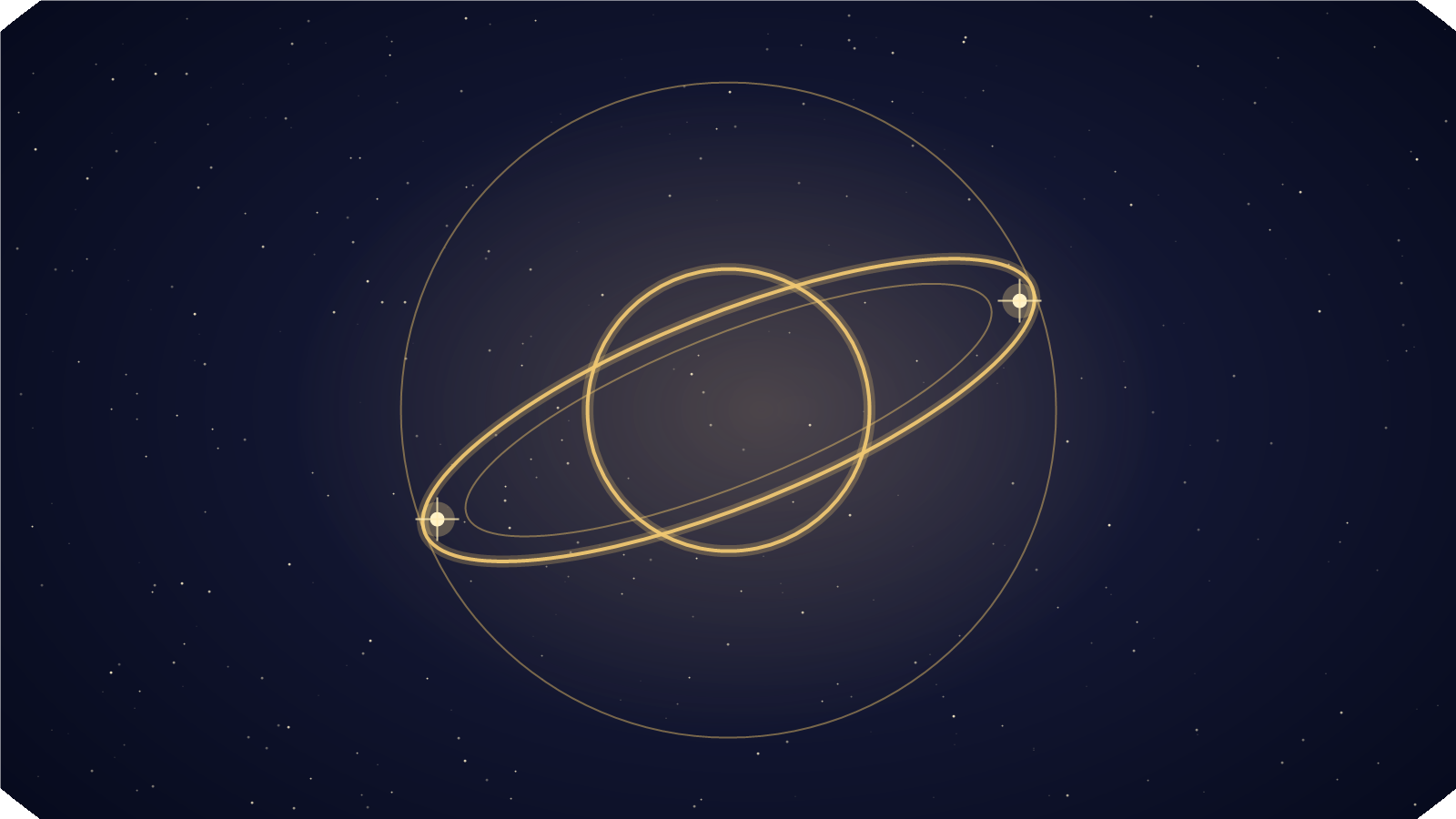
Few milestones in Western astrology capture the modern imagination quite like the Saturn Return. Between the ages of twenty-seven and thirty, many people notice an unmistakable shift in how time feels. Casual compromises grow unsustainable, borrowed definitions of success lose their luster, and questions of vocation, commitment, home, and personal integrity move to center stage. Symbolically, this threshold marks the moment transiting Saturn completes its first full orbit around the Sun since your birth, returning to the exact zodiac sign and degree it occupied in your natal sky.
Popular culture often dramatizes the Saturn Return as a storm of breakups, job upheavals, and existential reckonings. Traditional and contemporary astrologers take a steadier view. Associated since antiquity with boundaries, durability, craftsmanship, and earned authority, Saturn operates less like a harsh judge and more like a structural engineer inspecting a building after three decades of weather. Commitments resting on honest effort and genuine alignment tend to strengthen during this passage; arrangements held together by inertia, people-pleasing, or wishful thinking usually ask to be repaired or retired.
This guide examines the Saturn Return through the Western Tropical Zodiac, which measures the twelve signs seasonally from the Vernal Equinox rather than against background fixed-star constellations shifted roughly 23° to 24° by axial precession. Mapping how this passage unfolds in your chart builds directly on how to read your birth chart. By exploring orbital timing, Hellenistic sect, essential dignity, natal houses, elemental styles, and practical grounding habits, you can meet ages twenty-seven through thirty—and the later returns near ages fifty-seven and eighty-six—with steady clarity.
Astronomical Timing and the Three Saturn Return Chapters
The rhythm of a Saturn Return stems directly from planetary astronomy. Orbiting the Sun at an average distance of 1.43 billion kilometers, Saturn takes approximately 29.46 Earth years—roughly 10,759 days—to complete a single 360-degree revolution around the ecliptic. Across twelve thirty-degree signs, Saturn lingers in each zodiac sign for roughly 2.4 to 2.5 years. Astrologers track two layers of timing: the broader whole-sign window, starting when transiting Saturn enters your natal Saturn’s sign, and the exact degree conjunction, when transiting Saturn reaches the exact arcminute it held at birth.
Because Saturn enters your natal sign anywhere from months to over two years before touching your natal degree, the first Saturn Return generally spans ages twenty-seven through thirty and peaks around age 29.5. If your natal Saturn occupies an early degree—such as 2° of a sign—you meet the exact conjunction soon after ingress, followed by nearly two years of steady consolidation. If your natal Saturn sits near 27° or 28°, the theme builds gradually across the whole-sign window before culminating closer to age thirty.
Saturn’s annual apparent retrograde cycle shapes this timeline further. Roughly every 378 days, faster-moving Earth overtakes Saturn along its interior orbit, creating the visual appearance that Saturn slows, stations, and drifts backward across 6° to 7° of the zodiac for about 4.5 months (roughly 138 days). When your natal Saturn falls inside that retrograde zone, transiting Saturn makes up to three exact passes over your natal degree: an opening direct pass introducing the core issue, a retrograde review pass prompting internal recalibration, and a final direct pass sealing the revised structure into place.
Between returns, transiting Saturn forms a major hard aspect—a 90-degree square or 180-degree opposition—to its natal position roughly every seven years. Viewing these checkpoints alongside planetary aspects in astrology reframes your Saturn Return as the natural closing and restarting of a lifelong cycle rather than an isolated ambush.
| Saturn Cycle Milestone | Approximate Age | Geometric Alignment | Primary Developmental Theme |
|---|---|---|---|
| First Opening Square | 7 to 7.5 years | 90° waxing square | Early awareness of rules, school structure, and accountability beyond family habits. |
| First Opposition | 14 to 15 years | 180° opposition | Adolescent friction with authority; testing personal limits against inherited expectations. |
| First Closing Square | 21 to 22 years | 270° waning square | Leaving late adolescence; initial career, academic, or financial reality checks. |
| First Saturn Return | 27 to 30 years (exact ~29.5) | 0° conjunction | Stepping into self-authored adulthood; pruning unsustainable ties and anchoring direction. |
| Second Opening Square | 36 to 37 years | 90° waxing square | Stress-testing structures built near thirty; adjusting workload, family roles, or leadership. |
| Second Opposition | 44 to 45 years | 180° opposition | Midlife visibility checkpoint; weighing outer achievements against private fulfillment. |
| Second Closing Square | 51 to 52 years | 270° waning square | Distilling priorities; trimming peripheral obligations to protect high-value work. |
| Second Saturn Return | 57 to 60 years (exact ~58.9) | 0° conjunction | Harvesting decades of craft; redefining legacy, mentorship, stewardship, and elderhood. |
| Third Saturn Return | 86 to 89 years (exact ~88.4) | 0° conjunction | Long-horizon reflection; distilling wisdom, simplification, and intergenerational continuity. |
Comparing the three returns highlights how Saturn matures alongside you. In the late twenties, most people confront the gap between youthful experimentation and finite adult time; the task is largely architectural—deciding which foundations to build and which drafts to set aside. By the second return near ages fifty-seven to sixty, decades of lived evidence clarify your stamina and values. That chapter focuses less on proving competence to outsiders and more on curating a dignified transition toward mentorship, mastery, or intentional simplification. Those reaching a third return in their late eighties view life’s arc from a rare vantage centered on enduring essentials.
How Natal Aspects to Saturn Customize Your Return
One frequently overlooked factor in timing is that transiting Saturn does not touch your natal Saturn in isolation—it simultaneously reactivates every tight natal aspect connected to your Saturn at birth. If your natal Saturn forms a conjunction, square, or opposition with your Moon, emotional security and domestic care inevitably enter the restructuring alongside career or maturity questions. A natal Saturn–Venus link weaves relational standards, creative craft, and financial valuation directly into the return, while a Saturn–Mars configuration tests how you pace ambition, handle frustration, and channel physical drive into sustained output. Even supportive trines or sextiles from Jupiter or Mercury offer built-in outlets—showing where clear communication, study, or prudent optimism eases Saturn’s heaviest demands.
Day Chart vs. Night Chart: Why Hellenistic Sect Shapes Your Saturn Return
Classical astrologers long asked why two people born in the same month—sharing the exact same Saturn sign and degree—can navigate their Saturn Return with noticeably different emotional textures. One individual experiences steady promotions, a stable mortgage, and crisp focus, while another faces exhausting delays and prolonged restructuring before relief arrives. Alongside house placement and aspects, Hellenistic astrologers pointed first to a foundational principle called sect (hairesis).
Sect divides every natal chart according to whether the Sun stood above or below the horizon at birth. In a Day Chart (diurnal chart), the Sun resides in the upper hemisphere—houses seven through twelve—meaning daylight illuminated the sky. In a Night Chart (nocturnal chart), the Sun sits below the Ascendant–Descendant axis in houses one through six. Traditional astrology assigns the seven visible planets to either the daytime solar team or the nighttime lunar team, noting that planets act more constructively within their preferred lighting conditions.
Saturn belongs strictly to the diurnal sect. Described classically as cold and dry, Saturn works more smoothly when moderated by daytime solar warmth. In a Day Chart, Saturn is “in sect”: its rigor typically manifests as grounded structure, realistic pacing, sober judgment, and tangible rewards for steady effort. Challenges still arise, yet they tend to follow legible rules—disciplined labor and kept promises usually produce concrete stability without endless detours.
In a Night Chart, Saturn operates “out of sect.” Without daytime warmth tempering its chill, Saturn’s limits can register as heavier, sharper, or more isolating during a first return. Night-chart natives frequently report carrying responsibility more intensely, encountering slower external recognition, or battling stricter self-criticism while establishing adult foundations. Having a Night Chart is never a fatalistic verdict; instead, it functions as practical weather forecasting—reminding you to protect recovery time, lean on trustworthy allies instead of stoic isolation, and measure progress across years rather than weeks.
Classical practice pairs sect with essential dignity, explored in planetary rulers and essential dignities. Saturn holds traditional rulership (domicile) in two signs: earth-grounded Capricorn, where it builds durable institutions through patient mastery, and air-oriented Aquarius, where it engineers objective principles and enduring social systems. Saturn also holds exaltation in Libra—with its classical exact exaltation degree at 21° Libra—reflecting how Saturnian fairness, contracts, and balanced judgment elevate relational harmony.
By contrast, Saturn sits in traditional detriment in Cancer and Leo—the signs opposite Capricorn and Aquarius—and in traditional fall in Aries, with its exact degree of fall at 21° Aries. In these signs, Saturn’s preference for caution and delay creates productive friction with the sign’s native temperament: Cancer seeks emotional closeness, Leo craves radiant visibility, and Aries favors swift starts. A Saturn Return in detriment or fall invites nuanced skill rather than gloom—showing how firm boundaries protect intimacy in Cancer, how quiet craft sustains authentic confidence in Leo, and how strategic stamina turns bold initiatives into finished results in Aries.
Saturn Return by Natal House: Pinpointing Which Life Arena Restructures
Because Saturn spends roughly two and a half years in each sign, millions of peers in your age cohort share your natal Saturn sign. What makes your Saturn Return distinctly personal is its natal house, determined by your birth time, birth location, and Rising sign. As outlined in astrology houses explained, the twelve houses divide the sky into concrete arenas—from personal vitality and finances to close partnerships and public career. Your Ascendant anchors that twelve-house wheel, which is why understanding Sun, Moon, and Rising signs explained shows how two people born on the same day renovate entirely different spheres of life.
Astrologers employ different house systems, most commonly Whole Sign houses (one complete sign per house) and Placidus houses (varying in size by geographic latitude). If your natal Saturn sits near a Placidus house cusp, inspecting both systems clarifies whether adjacent life arenas are active simultaneously. The table below maps signature Saturn Return focus areas across all twelve houses.
| Natal House | Core Life Arena | Key Saturn Return Questions | Constructive Milestone |
|---|---|---|---|
| 1st House | Identity, vitality, personal agency | Who am I without performing for approval, and how must I steward my energy? | Quiet self-possession, disciplined stamina, and an authentic outward presence. |
| 2nd House | Income, assets, self-worth | Which financial habits build real stability, and do my skills reflect fair value? | Realistic budgets, steady savings, sustainable pricing, and grounded self-reliance. |
| 3rd House | Communication, learning, local ties | Where does mental clutter dilute my voice, and what skills merit deep study? | Writing or speaking with clarity; refining sibling and neighborhood boundaries. |
| 4th House | Home, family roots, private base | What does domestic sanctuary require, and which inherited patterns end here? | Relocating intentionally, stabilizing housing, or setting mature family limits. |
| 5th House | Creativity, romance, children, joy | Am I taking my creative gifts seriously, and how do joy and duty coexist? | Completing a flagship creative project, intentional parenthood, or mature romance. |
| 6th House | Workflow, health routines, service | Which unsustainable work habits drain resilience, and how can craft replace busyness? | Repeatable wellness systems, technical mastery, and sane workplace boundaries. |
| 7th House | Partnerships, contracts, alliances | Do my closest agreements reflect mutual respect, reliability, and shared direction? | Formalizing a durable marriage or alliance—or cleanly closing an imbalanced bond. |
| 8th House | Shared resources, debt, vulnerability | Where have unspoken obligations or entanglements quietly eroded peace of mind? | Retiring complex debt, clarifying financial agreements, and deepening emotional honesty. |
| 9th House | Higher study, beliefs, publishing | Which borrowed philosophies withstand lived experience, and what truth merits commitment? | Finishing advanced study, publishing work, relocating abroad, or clarifying ethics. |
| 10th House | Career, reputation, public calling | Does my visible vocation match my character, or am I climbing someone else’s ladder? | Stepping into leadership, pivoting to lasting work, or earning solid respect. |
| 11th House | Friendships, networks, collective aims | Which communities nourish real growth, and which ties survive only on nostalgia? | Curating loyal alliances, leading civic networks, and grounding long-range goals. |
| 12th House | Solitude, subconscious habits, closure | What hidden self-sabotage or unprocessed fatigue needs honest private attention? | Restorative solitude, therapeutic reflection, spiritual discipline, and releasing burdens. |
House categories also shape how visibly your transit registers to others. When natal Saturn occupies an angular house—the 1st, 4th, 7th, or 10th—the Saturn Return frequently triggers prominent outward milestones: changing professions, stepping into leadership, relocating, or restructuring a primary partnership in the seventh house in astrology. When Saturn resides in a cadent house (3rd, 6th, 9th, or 12th), the pivotal breakthroughs typically unfold privately first—reorganizing mental habits, resolving burnout, refining daily logistics, or reshaping foundational beliefs before those inner adjustments shift outward status.
Saturn Return Themes Across the Four Elements
While houses pinpoint the arena undergoing renovation, Saturn’s zodiac element describes the core temperament being tempered. Combining the perspectives in four elements in astrology with the pacing distinctions of cardinal, fixed, and mutable signs reveals how each elemental trio approaches maturity.
Fire Signs: Aries, Leo, and Sagittarius
A Fire-sign Saturn Return focuses on turning raw enthusiasm into durable stamina. Fire thrives on bold vision and spontaneous momentum, yet Saturn insists that sparks be tended patiently to last. Saturn in Aries explores the boundary between decisive courage and hasty burnout, proving that measured preparation sharpens autonomy. Saturn in Leo addresses performance pressure and external applause, cultivating a sturdier creative confidence rooted in honest craft. Saturn in Sagittarius audits convictions and horizons: sweeping philosophies, academic plans, or restless wanderlust are tested against daily conduct, distilling broad curiosity into lived integrity.
Earth Signs: Taurus, Virgo, and Capricorn
Saturn shares an instinctive affinity with Earth’s tangible pragmatism, yet Earth-sign returns carry a pointed demand: replacing scarcity-driven overwork with wise stewardship. Saturn in Taurus evaluates financial security, physical ease, and stubborn attachments, distinguishing true stability from clinging to outgrown routines out of fear. Saturn in Virgo inspects perfectionism, analytical overload, and daily workflows, channeling exacting care into meaningful service without micromanaging yourself into fatigue. Saturn in Capricorn, operating in its nocturnal home sign, heightens themes of ambition and credibility; the central question is ensuring hard-won authority serves a life you genuinely value rather than an endless treadmill of duty.
Air Signs: Gemini, Libra, and Aquarius
Air signs inhabit ideas, language, agreements, and social frameworks, so an Air-sign Saturn Return hones intellectual focus and relational precision. Saturn in Gemini trims scattered multitasking and surface chatter, rewarding disciplined study, clear writing, and direct speech. Saturn in Libra, sitting in exaltation, brings rigorous attention to reciprocity and formal alliances; vague assumptions yield to explicit contracts and durable partnerships. Saturn in Aquarius—its diurnal domicile—bridges visionary ideals with practical community structures, examining where healthy objectivity ends and consistent human solidarity begins.
Water Signs: Cancer, Scorpio, and Pisces
Water governs emotional memory, intimacy, intuition, and empathy—spheres where Saturn’s crisp borders can initially feel austere before proving deeply protective. Saturn in Cancer works through emotional self-reliance and family narratives, helping you care for yourself and loved ones without armoring your heart or absorbing others’ distress. Saturn in Scorpio navigates power dynamics, shared trust, and guarded control, revealing that lasting resilience grows from transparent boundaries rather than secrecy. Saturn in Pisces gives tangible form to imagination and compassion; structured rest, concrete creative schedules, and clear limits keep sensitivity grounded instead of drained by escapism or over-sacrifice.
Practical, Grounded Strategies for Navigating Your Saturn Return
Symbolic awareness becomes genuinely helpful when translated into calm, practical choices. Saturn rarely rewards theatrical overnight reinventions or frantic efforts to dodge discomfort. Instead, this roughly thirty-month passage honors honesty about finite constraints—your calendar, energy reserves, budget, and real priorities. Five grounded practices support steady progress while Saturn transits your natal sign:
- Separate self-chosen goals from inherited scripts: List your major commitments across work, finances, housing, and close ties, then identify which reflect your current values versus expectations absorbed from parents, peers, or a younger self.
- Trade burst effort for repeatable systems: Rather than waiting for rare inspiration, build modest routines—automated savings, protected creative hours, consistent sleep—that compound quietly over two years.
- Close misaligned chapters cleanly: Saturn respects decisive endings over lingering half-commitments. Renegotiating an unclear role, stepping away from a stalled obligation, or trimming bloated expenses restores immediate clarity.
- Respect physical limits and routine maintenance: Preventive healthcare, ergonomic workspaces, debt schedules, and adequate rest rarely feel glamorous, yet tending mundane infrastructure prevents avoidable crises.
- Seek seasoned mentorship and candid feedback: Historically linked with elders and master craftspeople, Saturn responds well when you consult mentors ten or twenty years further along your path instead of improvising alone.
Keeping a brief quarterly journal throughout the transit also pays dividends. Because Saturn works incrementally, day-to-day adjustments often feel unremarkable while you live inside them. Reviewing entries twelve or eighteen months later almost always highlights how substantially your discernment, boundaries, and composure have matured.
Finally, practice distinguishing constructive discipline from needless self-punishment. Productive Saturnian effort feels demanding yet leaves you progressively steadier, more capable, and more aligned with your own conscience; misaligned endurance feels draining without producing genuine skill, trust, or stability. Checking that contrast periodically ensures you invest your resilience in projects and partnerships that genuinely merit long-term devotion.
Saturn Return vs. Vedic Sade Sati: Understanding the Cultural Distinction
Students exploring both Western and Indian astrological lineages often encounter Sade Sati alongside the Saturn Return and assume both labels describe the same transit. Although both track Saturn’s slow passage through the zodiac, they measure different natal anchor points, rely on different zodiacal frameworks, and cover different spans of time. Keeping their mechanics distinct respects each tradition accurately—a contrast examined more broadly in Tropical vs. Sidereal astrology.
The Western Saturn Return tracks transiting Saturn returning to your natal Saturn in the Tropical zodiac. Because Saturn stays in a single sign for roughly 2.5 years, the sign-based return spans about two and a half years and arrives at universal human age windows—approximately ages 27–30, 57–60, and 86–89—centering on adult accountability and structural self-authorship.
In Vedic astrology (Jyotish), Sade Sati—meaning “seven and a half”—tracks transiting Saturn (Shani) moving across three consecutive Sidereal signs anchored to your natal Moon (Chandra): the twelfth sign before your Moon sign, the sign holding your natal Moon, and the second sign after it. Spending roughly 2.5 years per sign, Sade Sati unfolds across approximately 7.5 years in three stages (rising, peak, and setting). Because the Moon can stand anywhere relative to Saturn on your birthday, Sade Sati does not occur at a fixed universal age; one person may begin it in childhood while another enters it in their thirties. Additionally, because Jyotish uses the Sidereal zodiac—offset from the Tropical zodiac by an ayanamsha of roughly 23° to 24°—your Sidereal Moon and Saturn frequently occupy one sign earlier than your Tropical placements.
If your natal Saturn and natal Moon sit close together in the sky, a Western Saturn Return and a segment of Vedic Sade Sati can overlap during the same years, blending practical life restructuring with deeper emotional introspection. For most people, however, the two cycles unfold in separate decades, making it essential never to conflate them.
Frequently Asked Questions About the Saturn Return
Does everyone experience their first Saturn Return at the exact same age?
Nearly, though orbital subtleties shift individual timing by up to two years. Saturn’s orbit is slightly elliptical, so it travels modestly faster near perihelion and slower near aphelion. Combined with your natal Saturn’s exact degree and annual retrograde loops, the whole-sign phase can begin around age twenty-seven while the final exact conjunction may conclude just past age thirty.
Can a Saturn Return bring joyful milestones rather than difficult disruptions?
Yes. Weddings, business launches, advanced degrees, home purchases, completed books, and long-awaited promotions routinely occur right on an exact Saturn Return. Saturn is not opposed to happiness; it simply asks that joy rest on solid ground. When steady work throughout your twenties aligns with realistic goals, the return often delivers the formal milestone crowning those efforts.
What if I do not know my exact birth time—can I still track my Saturn Return?
You can still track much of it reliably. Because Saturn moves only a few arcminutes per day, your natal Saturn’s sign, elemental themes, and exact transit dates stay virtually unchanged regardless of birth hour. Exact birth time is specifically required to pinpoint your natal house, your Rising sign, and—near sunrise or sunset—whether you have a Day Chart or Night Chart.
How does a three-pass retrograde return differ from a single-pass return?
A single exact conjunction often feels concentrated and decisive: a clear commitment or change arrives, you respond directly, and momentum moves forward. When retrograde motion produces three exact passes across eight to ten months, the passage unfolds like drafting an important work—an opening catalyst on the first pass, deeper questioning and logistical revision during the retrograde pass, and final consolidation on the third direct pass.
Why do the late twenties feel intensified by other astrological cycles simultaneously?
Your first Saturn Return arrives alongside two additional timing clocks near ages twenty-seven to twenty-eight: the progressed Lunar Return (an emotional reset every ~27.3 years) and the second Lunar Nodal Opposition near age 27.9, explored in our guide to the North Node and South Node in astrology. Together, these overlapping milestones explain why the late twenties feel like a defining cultural pivot.
What does it mean if my natal Saturn is retrograde?
Roughly thirty-six percent of people are born with natal Saturn retrograde. Far from indicating bad luck, this placement points to an internalized relationship with authority, pacing, and personal standards. Early on, you may question conventional rules or hold yourself to unusually private benchmarks; during the Saturn Return, growth often centers on replacing harsh self-policing with calm, self-authored competence.
How does life usually feel once Saturn finally leaves my natal sign?
Once transiting Saturn ingresses into the next zodiac sign—usually around age thirty or thirty-one—most people feel a clear exhale. The heavy auditing pressure eases, highlighting the tangible structures, skills, and boundaries forged over the preceding two and a half years. From there begins a constructive seven-year building phase leading toward your second opening square near age thirty-six.
Note on Astrology: Western astrology is presented here as a traditional cultural, historical, and reflective symbolic framework for self-inquiry. Planetary cycles do not determine fixed outcomes, and astrological concepts should never substitute for qualified medical, psychological, legal, or financial guidance.