Few astrological phrases have crossed from specialist almanacs into everyday conversation as thoroughly as “Mercury retrograde.” Blamed on social media for delayed trains, corrupted spreadsheets, spilled coffee, and sudden late-night texts from former partners, this recurring celestial cycle has become modern culture’s favorite shorthand for minor chaos. Strip away the viral jokes and dramatic warnings, however, and you discover something far more grounded: a completely predictable astronomical perspective effect that ancient skywatchers tracked with mathematical precision long before smartphones or airlines existed.
Mercury appears to move backward across our sky three—and occasionally four—times every calendar year, with each retrograde window lasting roughly nineteen to twenty-four days (about three weeks). Because the cycle repeats approximately every 116 days, humanity spends nearly a fifth of every year under a Mercury retrograde period. If every contract signed or trip taken during those weeks were genuinely doomed, global commerce, education, and travel would grind to a halt every few months. Clearly, reality works differently.
In Western astrology—which maps planetary positions onto the seasonal Tropical Zodiac anchored to the Vernal Equinox rather than the astronomical star constellations shifted roughly twenty-three to twenty-four degrees by axial precession—Mercury symbolizes perception, speech, trade, logistics, and information exchange. When Mercury enters apparent retrograde motion, traditional and contemporary astrologers treat the interval not as cosmic sabotage, but as a structured pause for editing, double-checking assumptions, and refining zodiac sign communication in relationships and daily work. Learning how the cycle fits into how to read your birth chart replaces superstition with practical perspective.
The Astronomy Behind Apparent Retrograde Motion
First and foremost, Mercury never slams on its cosmic brakes or spins backward in space. As the innermost planet in our solar system, Mercury whips around the Sun in just 87.97 Earth days at an average orbital speed of about 47.4 kilometers per second. Earth travels a much wider loop farther out, completing one solar orbit in 365.25 days at roughly 29.8 kilometers per second. Both worlds orbit counterclockwise when viewed from above the Sun’s north pole, obeying the steady pull of gravity without interruption.
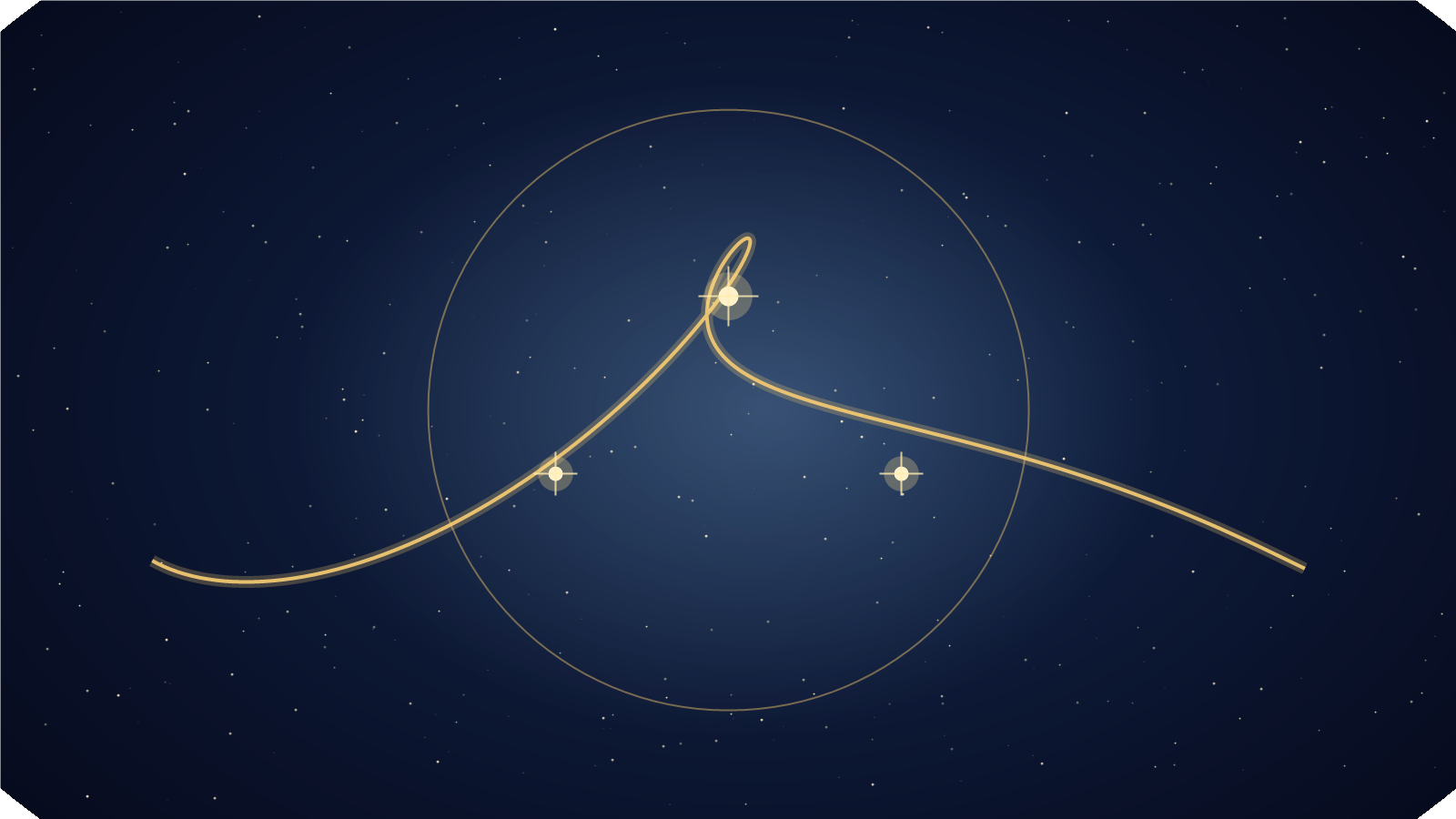
Apparent retrograde motion is a genuine optical perspective illusion produced by two planets moving at different speeds along concentric lanes. Picture driving on a multi-lane highway or watching two runners round an oval track. As the faster runner on the inside lane catches up to and overtakes the slower runner on the outside lane, the relative angle between them shifts rapidly. For a short stretch, viewing the faster planet from our moving Earth platform against the vastly distant background of stars makes Mercury look as though it slows to a standstill, drifts westward against its usual eastward zodiac trajectory, pauses again, and then resumes forward motion.
Trying to account for these looping planetary backtracks actually shaped the history of science. In the second century CE, Alexandrian astronomer Claudius Ptolemy built elaborate geometric circles-within-circles called epicycles to predict retrograde loops from an Earth-centered vantage point. Nearly fourteen centuries later, in 1543, Nicolaus Copernicus demonstrated that placing the Sun at the center explained retrograde motion effortlessly through simple orbital overtaking—turning an ancient astronomical puzzle into decisive evidence for the heliocentric solar system.
Halfway through every Mercury retrograde period occurs a pivotal astronomical alignment called the inferior conjunction, when Mercury glides directly between Earth and the Sun. Because Mercury reaches its closest physical proximity to Earth during this midpoint—roughly 77 to 90 million kilometers away compared to over 200 million kilometers on the far side of the Sun—classical astrologers paid close attention to this moment. In medieval and Renaissance texts, when Mercury draws within about seventeen arcminutes of the exact center of the Sun’s disk, it is termed Cazimi (derived from the Arabic kaṣīmī, meaning “in the heart of the Sun”). Rather than viewing the midpoint as peak confusion, traditional sources celebrate Mercury Cazimi as a sharp, brief window of insight cutting straight through earlier noise.
That inferior conjunction also flips Mercury’s visible relationship with the Sun in our sky. Leading into a retrograde, Mercury trails the Sun as an Evening Star visible briefly after sunset; passing through inferior conjunction, it overtakes the Sun and re-emerges weeks later as a Morning Star rising ahead of dawn. Classical authors linked Evening Star (Epimethean) Mercury to reflective hindsight and synthesis, whereas Morning Star (Promethean) Mercury symbolized swift, forward-looking initiative—meaning every retrograde astronomically resets Mercury from looking backward to looking ahead.
Anatomy of Every Mercury Retrograde Cycle
While pop calendars highlight only the twenty-one-day stretch between Mercury turning retrograde and turning direct, practicing astrologers watch a wider seven-to-eight-week story. Because Mercury sweeps backward across a specific span of zodiac degrees—say, from twenty-four degrees back to ten degrees of a sign—it actually crosses that exact stretch of sky three separate times: first moving forward, second moving retrograde, and third moving forward again. The flanking intervals before and after the retrograde window are known as the shadow periods (often nicknamed “retroshade”).
| Cycle Phase | Astronomical Behavior | Typical Duration | Symbolic Focus in Astrology |
|---|---|---|---|
| Pre-Retrograde Shadow (Pre-Retroshade) | Mercury first passes forward over the zodiac degree where it will later station direct | ~2 weeks | Early preview of projects, scheduling kinks, or conversations that will require revision |
| Station Retrograde | Apparent eastward velocity slows to a visual standstill along the ecliptic | 1–2 days | Heightened pause; misread instructions, delayed replies, or sudden second thoughts appear |
| Retrograde & Inferior Conjunction (Cazimi) | Apparent westward drift; Mercury passes between Earth and Sun at the midpoint | ~19–24 days (Cazimi lasts hours) | Active review, editing, troubleshooting, and a midpoint flash of clarifying perspective |
| Station Direct | Apparent westward motion halts before forward travel resumes | 1–2 days | Turning point; missing details arrive, stalled negotiations unfreeze, plans re-align |
| Post-Retrograde Shadow (Post-Retroshade) | Mercury travels forward across the retrograde degrees for the third and final pass | ~2 weeks | Integration, finalizing edits, executing revised agreements, and closing loose loops |
Viewing the cycle as a three-act narrative removes much of the frustration surrounding delays. During the pre-shadow pass, a draft proposal or travel itinerary takes shape. During the retrograde pass, hidden flaws or overlooked budgets come to light—often crystallizing around the Cazimi midpoint. By the end of the post-shadow pass, the refined version stands on much firmer footing than the rushed initial draft ever would have.
Experienced observers also note why the exact station days—the twenty-four to forty-eight hours surrounding Station Retrograde and Station Direct—tend to feel noticeably louder than the middle weeks. At full speed, Mercury covers between one and a half and two degrees of the zodiac per day; right before reversing direction, its apparent daily motion drops nearly to zero, visually parking on a single ecliptic degree. In traditional timing techniques, a stationary planet acts like a magnifying glass concentrating attention onto whichever natal degree or daily matter stands directly beneath it.
What Mercury Retrograde Symbolizes Across the Four Elements
Not every Mercury retrograde carries the same atmosphere. Because Mercury’s synodic interval of roughly 116 days steps backward around the zodiac by nearly 120 degrees each cycle, the retrogrades of any given calendar year tend to cluster predominantly within one of the four elements in astrology before gradually migrating into the preceding element the next year. Pairing elemental tone with the rhythms of cardinal, fixed, and mutable signs reveals why one retrograde feels logistically dense while another feels deeply introspective.
Fire Sign Retrogrades: Aries, Leo, and Sagittarius
When Mercury backtracks through Fire signs—including bold Aries, expressive Leo, and wide-ranging Sagittarius—the spotlight lands on enthusiasm outrunning fine print. Fast pitches, heated debates, impulsive promises, and half-baked creative launches are classic friction points. Rather than forcing immediate applause or rushing to win an argument, Fire retrogrades reward slowing down to test whether a thrilling vision holds up under practical scrutiny. Artists, speakers, and founders often discover that rewriting an opening chapter, tightening a stage presentation, or reexamining long-term goals restores genuine creative spark.
Earth Sign Retrogrades: Taurus, Virgo, and Capricorn
Earth retrogrades—unfolding through steady Taurus, meticulous Virgo, and structured Capricorn—turn attention squarely toward tangible systems: budgets, invoices, supply chains, calendar dependencies, and workplace workflows. Notice that Mercury holds both its classical domicile and exaltation in Virgo, giving Earth-sign retrogrades a crisp editorial edge. Though shipping delays or accounting typos can test patience, these intervals excel at auditing recurring expenses, decluttering digital folders, servicing aging equipment, and strengthening practical routines that support long-term security.
Air Sign Retrogrades: Gemini, Libra, and Aquarius
Air is the quintessential domain of intellect and dialogue, encompassing Mercury’s daytime domicile in Gemini alongside diplomatic Libra and community-minded Aquarius. Retrogrades in Air signs tend to produce the textbook communication tangles people recognize instantly: crossed wires in group chats, misquoted emails, software glitches, postponed committee votes, and renegotiated social agreements. Constructively handled, Air retrogrades shine as periods for listening carefully, updating outdated terminology, reconciling misunderstandings with peers, and gathering diverse viewpoints before locking in a final consensus.
Water Sign Retrogrades: Cancer, Scorpio, and Pisces
Moving through Water signs—nurturing Cancer, probing Scorpio, and imaginative Pisces—Mercury trades crisp linear logic for memory, tone, and emotional nuance. In traditional dignity tables, Mercury sits in both detriment and fall in Pisces, reflecting how tidy bullet points easily dissolve into intuition, poetry, or nostalgic daydreams here. Water retrogrades can feel foggy when handling strict data entry, yet they are remarkably fertile for journaling, family conversations, music, counseling reflection, and uncovering unspoken feelings that pure logic previously bypassed.
Over roughly six to seven years, Mercury’s retrograde clusters migrate steadily backward through the elemental order—shifting from Fire into Water, then Air, then Earth, and back to Fire again. During transitional years, a single retrograde frequently begins in the opening degrees of one element and backtracks across the sign boundary into the final degrees of the preceding element, creating a distinct two-stage flavor where, for instance, a bold Fire-sign debate pivots mid-cycle into deeper Water-sign emotional honesty.
Practical, Grounded Ways to Navigate a Mercury Retrograde
You never need to freeze your calendar, turn down a well-earned promotion, or cancel a long-planned vacation simply because Mercury appears backward against the stars. Seasoned astrologers treat the cycle as a built-in quarterly tune-up anchored in “re-” habits—reviewing, revising, repairing, reorganizing, and reconnecting. Notice that every guideline below makes sensible real-world organization easier regardless of planetary alignments:
- Build cushion into travel and meetings: Arrive at stations or airports a little earlier, screenshot boarding passes offline, and reconfirm appointment times and time zones twenty-four hours beforehand so minor timetable shifts stay stress-free.
- Back up essential files before software updates: Export important documents, cloud photos, and work archives onto a secondary drive before installing major operating-system patches or migrating accounts.
- Read contracts slowly rather than avoiding them: If a lease, job offer, or client agreement arrives during retrograde, review deliverables, cancellation clauses, and payment dates carefully—or ask a qualified professional to double-check terms—instead of walking away from sound opportunities out of fear.
- Polish unfinished drafts and stalled projects: Retrograde periods favor finishing half-written articles, refactoring messy code, reorganizing studio supplies, and reviving strong pitches that previously sat on the shelf for lack of time.
- Reconnect thoughtfully with clear boundaries: Reaching out to an old mentor, classmate, or collaborator often yields warm surprises; if a past romantic partner resurfaces, weigh present reality and zodiac compatibility in love calmly rather than letting nostalgia rewrite history.
- Confirm tone aloud when texts feel ambiguous: Brief messages stripped of facial expression spark unnecessary friction; a two-minute voice call or polite clarifying question resolves most misunderstandings before they escalate.
One of the simplest ways to build genuine self-knowledge is keeping a brief retrograde journal across two or three consecutive cycles. Jot down the starting and ending dates, the zodiac sign involved, and two sentences noting which practical habits actually benefited from extra review. Within a single year, comparing those real entries against online horror stories immediately shows you which natal house themes consistently echo in your life—and which viral warnings were pure noise.
Natal Mercury Retrograde: What Being Born During One Means
Because Mercury spends roughly nineteen to twenty percent of each year in apparent retrograde motion, approximately one in five people alive today has natal Mercury retrograde in their birth chart. New students who spot that small “Rx” glyph beside Mercury on their chart printout occasionally worry that it predicts lifelong communication struggles. Nothing could be farther from historical or lived reality: accomplished novelists, investigative journalists, mathematicians, comedians, and public orators appear in abundance among natal Mercury retrograde charts.
Symbolically, natal Mercury retrograde describes a mind wired to process inwardly before broadcasting outwardly. People with this placement frequently absorb an entire room’s subtext, connect seemingly unrelated concepts nonlinearly, and refine their phrasing silently before speaking up. In fast-paced classrooms or meetings that reward the quickest hand raised, they can feel briefly out of step—only to deliver the sharpest, most thoroughly considered insight five minutes later. Tellingly, many individuals born under Mercury retrograde report feeling oddly calm, focused, and productive during transiting Mercury retrogrades, as though the noisy pace of the surrounding world finally slows down to match their natural contemplative rhythm.
Vedic astrology (Jyotish) reinforces this constructive assessment from an astronomical angle. In the Indian sidereal tradition, retrograde Mercury is called Budha Vakri. Classical Jyotish texts assign retrograde planets heightened Chesta Bala—motional strength—specifically because Mercury stands physically closer to Earth during its retrograde arc near inferior conjunction, making its disk symbolically potent rather than diminished. Rather than dulling intellect, Budha Vakri is traditionally associated with original analytical methods, relentless curiosity, and questioning conventional shortcuts. Examining Mercury’s sign and house alongside your Sun, Moon, and Rising signs shows exactly where that reflective brilliance concentrates.
Western astrologers also watch a symbolic timing method called secondary progressions, in which each day following birth corresponds to one year of lived growth. Because a Mercury retrograde only lasts about three weeks after birth, someone born with natal Mercury retrograde inevitably experiences their progressed Mercury turning direct somewhere between infancy and their early twenties. Many people recall that age window as a quiet personal milestone when previously private thoughts suddenly felt ready for wider writing, teaching, or outspoken dialogue.
Debunking 5 Viral Mercury Retrograde Myths
Because short-form social media rewards dramatic headlines over astronomical nuance, five stubborn myths resurface every four months like clockwork. Separating myth from actual tradition keeps astrology thoughtful and grounded.
Myth 1: Mercury Actually Reverses Direction in Orbit
No planet in our solar system ever pauses or reverses its orbital momentum around the Sun. Retrograde motion exists strictly as a geocentric line-of-sight phenomenon caused by Earth and Mercury circling at different radii and velocities. If you stood on the Sun looking down at the solar system, Mercury would glide forward smoothly every single day of its 87.97-day year.
Myth 2: You Must Never Sign Contracts, Buy Tech, or Start a New Role
Treating Mercury retrograde as a strict ban on normal adult milestones turns a symbolic reflection cycle into self-imposed paralysis. Leases expire, laptops break, and dream job offers arrive on real-world schedules—not astrological ones. When an important commitment lands inside a retrograde window, simply keep receipts, verify warranty coverage, confirm exact clauses in writing, and remain open to minor follow-up adjustments once Mercury turns direct.
Myth 3: Mercury Retrograde Physically Breaks Phones and Wi-Fi Routers
Mercury exerts virtually zero gravitational or electromagnetic influence on consumer electronics millions of kilometers away on Earth. What often happens instead is textbook confirmation bias: routers drop signals, updates glitch, and typo-filled emails slip through during every month of the year, yet when an alert reminds us Mercury is retrograde, our brains immediately link every ordinary tech hiccup to the sky.
Myth 4: Returning Ex-Partners Mean Cosmic Destiny Demands Reconciliation
Retrograde periods often coincide with nostalgic reflection, prompting people to scroll through old messages or wonder how former flames are faring. While revisiting past bonds can occasionally deliver helpful closure, an unexpected message does not automatically signal repaired trust or shared values. Grounding relationship choices in honest accountability and understanding your natal Venus sign in astrology prevents mistaking passing nostalgia for genuine long-term alignment.
Myth 5: Everyone Experiences Every Retrograde the Exact Same Way
Generic memes treat Mercury retrograde as a uniform weather front hitting eight billion people identically. In actual chart practice, each retrograde highlights one specific house and narrow degree band in your natal wheel. If Mercury passes quietly through an unoccupied sector without touching your natal angles or personal planets, the entire three-week span may glide past virtually unnoticed—whereas a retrograde sitting directly atop your Ascendant, Midheaven, or natal Mercury naturally feels far more personal.
Frequently Asked Questions About Mercury Retrograde
How often does Mercury go retrograde, and how long does each cycle last?
Mercury goes retrograde three times—and occasionally four times—every calendar year, spaced roughly every 116 days according to its synodic cycle with Earth. Each retrograde period spans approximately nineteen to twenty-four days, flanked by roughly two weeks of pre-shadow and two weeks of post-shadow.
Do other planets also experience apparent retrograde motion?
Yes—every planet in the solar system appears retrograde from Earth on a regular schedule, while the Sun and Moon never do. Venus turns retrograde roughly every eighteen months for about forty days, Mars every twenty-six months for around two months, and slow outer planets from Jupiter through Pluto spend four to five or more months appearing retrograde every single year.
What is the difference between the retrograde period and the shadow period?
During the core retrograde window, Mercury appears to drift backward through the zodiac. During the pre-shadow and post-shadow phases, Mercury travels forward normally, yet crosses the exact same strip of zodiac degrees it covers during its backward pass—acting as an opening preview and a closing cleanup phase.
Why do Gemini and Virgo placements often notice Mercury retrograde more strongly?
Mercury serves as the classical planetary ruler of both Gemini and Virgo. Whenever a chart’s ruling planet—especially the ruler of the Ascendant, Sun, or Moon—stations retrograde, its shift in direction naturally stands out more vividly in daily rhythms, routines, and communication habits.
Can you actually see Mercury moving retrograde in the night sky?
Because Mercury orbits so close to the Sun, it never strays more than about twenty-eight degrees from the solar glare, making it visible only briefly low on the horizon near sunrise or sunset around its greatest elongations. During the middle of its retrograde arc—near inferior conjunction—Mercury vanishes entirely into daytime sunlight and cannot be spotted with the naked eye.
Does Mercury retrograde influence medical outcomes, legal rulings, or stock markets?
No scientific evidence links Mercury’s apparent retrograde position to medical results, courtroom verdicts, or financial market movements. Astrology offers a traditional cultural and reflective language for self-observation, so health, legal, and investment decisions should always rest on qualified professional expertise and verifiable data.
How can I find out which area of my birth chart a Mercury retrograde affects?
Look up the zodiac sign and degree range of the current Mercury retrograde, then locate that exact sign on your natal chart wheel. The house occupying that sign indicates the symbolic arena—such as daily workflow in the 6th house, finances in the 2nd, or partnerships in the 7th—where thoughtful review pays off most.
Note on Astrology: Western astrology is a traditional cultural and symbolic framework designed for personal reflection and storytelling rather than deterministic prediction. Astrological timing should never replace qualified medical, legal, financial, or psychological counsel.