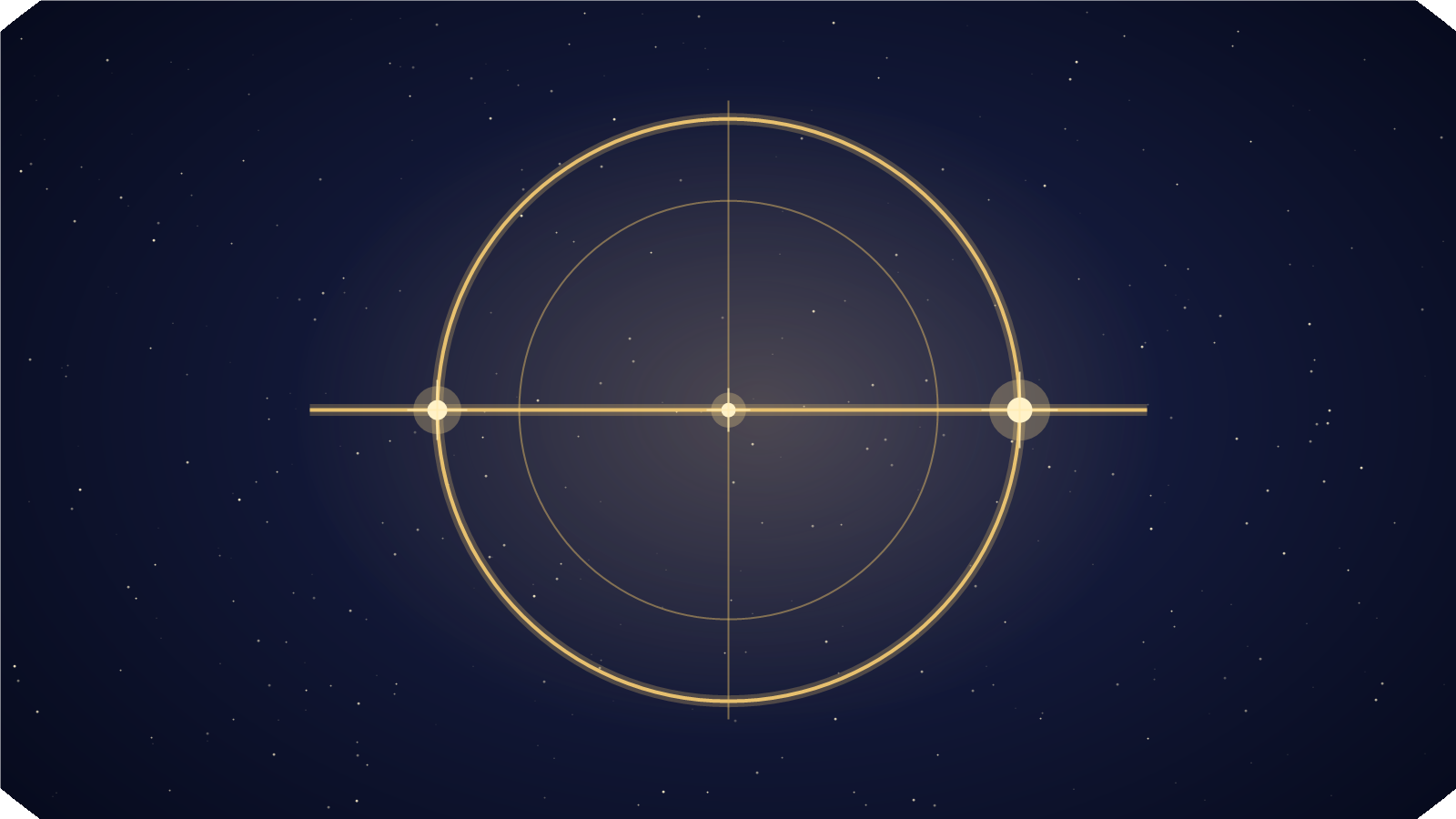
In Western tropical astrology, the Seventh House governs the arena where individual identity meets an equal counterpart. Positioned directly across the birth chart from the First House, its starting boundary—the Descendant—marks the exact degree of the ecliptic sinking below the western horizon at the moment and location of birth. Because it stands on one of the four primary angles of the natal chart alongside the First, Fourth, and Tenth Houses, the Seventh House functions as an Angular House, giving its themes high visibility, urgency, and formative weight throughout adult life.
Hellenistic astrologers called this sector Dysis, literally “the setting place,” and associated it with marriage, sworn contracts, business partnerships, legal counsel, open negotiations, and public rivals. Anyone with whom you shake hands, sign binding paperwork, share vows, or step into a transparent contest belongs here. Unlike the Twelfth House, which traditionally signifies concealed opposition or private undoing, the Seventh House describes opponents and collaborators standing openly across the table from you.
Before interpreting your own chart, it helps to clear up one of the most persistent misconceptions in popular astrology: the claim that the Seventh House is “naturally ruled by Libra and Venus.” That shortcut stems from a twentieth-century teaching device known as the Twelve-Letter Alphabet, which stacked Aries onto the First House, Taurus onto the Second, and so on around the wheel. While Libra certainly shares thematic resonance with balance and partnership, classical Western astrology never assigned zodiac signs as permanent owners of houses. Even in the ancient scheme of planetary joys—a foundational framework explored in our guide to astrology houses explained—the Seventh House holds no planetary joy at all. Mercury joys in the First House, the Moon in the Third, Venus in the Fifth, Mars in the Sixth, the Sun in the Ninth, Jupiter in the Eleventh, and Saturn in the Twelfth, leaving the Seventh House free of any universal planetary landlord.
In an actual birth chart, your Seventh House sign depends exclusively on your Ascendant, also called your Rising sign. Someone born with Taurus rising has Scorpio on the Seventh House, bringing Martian intensity and depth rather than Venusian diplomacy into committed unions. Likewise, these house cusps are calculated within the tropical zodiac—anchored to the seasonal Vernal Equinox rather than the background star constellations, which have drifted roughly 23 to 24 degrees through axial precession, a distinction detailed in our overview of tropical vs. sidereal astrology. Understanding your true Descendant sign, its planetary ruler, and any planets residing inside this house unlocks a remarkably grounded portrait of how you build enduring alliances.
The Ascendant–Descendant Axis: How the First and Seventh Houses Mirror One Another
Astronomically, the First and Seventh Houses share a single continuous line: the local horizon slicing the sky into an upper visible hemisphere and a lower hidden hemisphere. On the eastern side, the Ascendant marks where zodiac degrees rise into daylight; symbolically, it represents self-initiation, bodily presence, habitual reflexes, and how you enter an unfamiliar room. Exactly 180 degrees opposite on the western side, the Descendant marks where light descends out of sight; symbolically, it represents everything you seek outside yourself to feel whole, challenged, or met as an equal.
Because the Ascendant and Descendant always sit in opposite zodiac signs, they share the same modality—Cardinal, Fixed, or Mutable—while pairing complementary elements of Fire with Air or Earth with Water. Psychologically, this geometry explains why partnership often acts like an honest mirror. Early in adulthood, people frequently identify strongly with their Rising sign while projecting their Descendant traits onto lovers, spouses, or business associates. A deeply self-reliant Capricorn Rising may repeatedly partner with emotionally expressive, family-oriented individuals who embody Cancerian warmth until they gradually cultivate that nurturing capacity within themselves.
Learning to read this polarity as a unified axis rather than two competing corners is a vital step when studying how to read your birth chart. Each of the six zodiac axes operates in both directions, depending on which sign was ascending at birth.
| Rising Sign (1st House) | Descendant Sign (7th House) | Axis Modality & Elements | Self-Approach vs. Partnership Need |
|---|---|---|---|
| Aries / Libra | Libra / Aries | Cardinal (Fire & Air) | Independent initiative balanced against diplomatic reciprocity and mutual fairness |
| Taurus / Scorpio | Scorpio / Taurus | Fixed (Earth & Water) | Steady sensory security balanced against psychological depth and shared transformation |
| Gemini / Sagittarius | Sagittarius / Gemini | Mutable (Air & Fire) | Nimble local inquiry balanced against expansive worldview and philosophical candor |
| Cancer / Capricorn | Capricorn / Cancer | Cardinal (Water & Earth) | Protective emotional sanctuary balanced against structural reliability and long-term duty |
| Leo / Aquarius | Aquarius / Leo | Fixed (Fire & Air) | Personal warmth and creative pride balanced against egalitarian vision and autonomy |
| Virgo / Pisces | Pisces / Virgo | Mutable (Earth & Water) | Practical discernment and order balanced against imaginative grace and unconditional empathy |
The Descendant Sign in All Twelve Zodiac Signs
Your Descendant sign sets the atmospheric tone for committed relationships, highlighting the traits you magnetize in serious partners as well as the relational skills life asks you to negotiate. Notice that these qualities do not guarantee your spouse will hold that exact Sun sign; rather, a partner may express that sign strongly through their Moon, Rising, Venus, Mars, or dominant planetary emphasis.
Aries Descendant (Libra Rising)
Ruled by Mars, an Aries Descendant pulls Libra Risings toward partners who are candid, energetic, and unafraid of decisive movement. Because you naturally weigh multiple perspectives before acting, someone who speaks plainly and takes bold risks feels refreshing and clarifying. Friction arises when your preference for keeping the peace collides with a partner’s blunt impatience. Healthy bonds thrive when you voice your own desires directly instead of quietly resenting compromises you never actually wanted to make.
Taurus Descendant (Scorpio Rising)
Ruled by Venus, a Taurus Descendant invites Scorpio Risings into partnerships anchored by steadiness, sensual appreciation, and tangible follow-through. Accustomed to scanning subtext and navigating emotional intensity, you are drawn to companions whose loyalty feels calm, predictable, and unshakeable. Power struggles can surface around finances, routines, or stubbornness if either partner refuses to budge. Trust deepens when you allow simplicity and physical comfort into your bond without suspecting hidden agendas beneath quiet days.
Gemini Descendant (Sagittarius Rising)
Ruled by Mercury, a Gemini Descendant pairs Sagittarius Risings with witty, curious, and intellectually nimble partners who treat conversation as an ongoing adventure. While you gravitate toward sweeping beliefs and big-picture horizons, your ideal counterpart notices nuances, asks clever questions, and keeps daily life lively through humor and fresh ideas. Challenges emerge if scattered communication replaces follow-through, so establishing clear habits around zodiac sign communication in relationships keeps banter playful rather than evasive.
Cancer Descendant (Capricorn Rising)
Ruled by the Moon, a Cancer Descendant draws Capricorn Risings toward emotionally attuned, protective, and home-centered partners who soften life’s austere edges. Because your public demeanor projects composure and self-sufficiency, you often crave a private harbor where vulnerability is met with genuine care rather than performance metrics. Tension builds if professional obligations crowd out domestic intimacy or if moods remain unspoken. Enduring partnerships flourish when you treat emotional nourishment as an essential foundation rather than an afterthought.
Leo Descendant (Aquarius Rising)
Ruled by the Sun, a Leo Descendant attracts Aquarius Risings to expressive, generous, and creatively vibrant partners who bring unmistakable warmth into your orbit. Naturally inclined toward objectivity and intellectual independence, you appreciate a counterpart who celebrates loyalty openly and reminds you to savor affection without over-analyzing it. Clashes appear when your need for personal breathing room clashes with a partner’s hunger for wholehearted attention. Harmony grows through deliberate romance that still honors each person’s distinct individuality.
Virgo Descendant (Pisces Rising)
Ruled by Mercury, a Virgo Descendant connects Pisces Risings with observant, capable, and pragmatic partners who translate nebulous dreams into workable daily rhythms. Your fluid imagination and porous empathy benefit enormously from someone who remembers deadlines, organizes shared logistics, and offers grounded counsel. Strain develops if helpful suggestions morph into nitpicking or if you drift away to avoid practical accountability. Respecting each other’s distinct gifts turns everyday chores into tangible acts of mutual devotion.
Libra Descendant (Aries Rising)
Ruled by Venus, a Libra Descendant pairs Aries Risings with diplomatic, aesthetically minded, and socially graceful partners who value dialogue and shared decision-making. Used to charging ahead solo, you find balance alongside someone who pauses to consider tone, timing, and mutual benefit. Irritations flare when their careful deliberation feels like indecision or when your solo moves leave them feeling bypassed. Lasting closeness depends on welcoming collaboration as a force multiplier rather than a constraint on your freedom.
Scorpio Descendant (Taurus Rising)
Traditionally ruled by Mars and co-ruled in modern astrology by Pluto, a Scorpio Descendant leads Taurus Risings into magnetic, fiercely loyal, and psychologically transformative alliances. Surface-level pleasantries rarely sustain you once commitment deepens; you are pulled toward partners who value emotional honesty, strategic resourcefulness, and total devotion. Friction can surface around jealousy, control, or reluctance to change entrenched habits. When transparency replaces defensiveness, these partnerships weather crises with remarkable resilience and mutual trust.
Sagittarius Descendant (Gemini Rising)
Ruled by Jupiter, a Sagittarius Descendant brings Gemini Risings together with adventurous, candid, and ethically driven partners who broaden your perspective beyond familiar neighborhoods. You thrive with someone who shares a thirst for learning through travel, cultural study, or spirited philosophical debate. Disagreements arise when blunt idealism collides with your nuanced skepticism or when restlessness makes long-term planning slippery. Anchoring your shared curiosity to concrete goals keeps enthusiasm high without sacrificing dependability.
Capricorn Descendant (Cancer Rising)
Ruled by Saturn, a Capricorn Descendant gravitates Cancer Risings toward mature, dependable, and goal-oriented partners who demonstrate love through consistent action and long-range commitment. Many people with this placement marry slightly later, choose partners with notable life experience, or build relationships that steadily improve over decades. Coldness can creep in if practical duties eclipse tender reassurance. Balancing clear boundaries with heartfelt affection allows this placement to construct extraordinarily durable marriages and professional ventures.
Aquarius Descendant (Leo Rising)
Traditionally ruled by Saturn and modernly co-ruled by Uranus, an Aquarius Descendant links Leo Risings with unconventional, progressive, and intellectually stimulating partners who prize friendship as the bedrock of romance. You are drawn to original thinkers who challenge routine expectations and support your creative voice without clinging possessively. Friction emerges if emotional detachment leaves you feeling unappreciated or if eccentric schedules disrupt shared rituals. Cultivating both mutual admiration and respectful space lets this dynamic stay fresh for years.
Pisces Descendant (Virgo Rising)
Traditionally ruled by Jupiter and modernly co-ruled by Neptune, a Pisces Descendant draws Virgo Risings toward compassionate, artistic, and intuitively gifted partners who invite you to soften rigid self-criticism. After spending considerable energy perfecting details, you feel restored by someone who appreciates mystery, music, spirituality, and emotional grace. Pitfalls arise when rescue dynamics replace equal partnership or when vague boundaries blur financial and practical agreements. Pairing clear expectations with generous empathy creates deeply healing companionship.
The Ruler of the Seventh House: Tracing the Real Partnership Story
While the Descendant sign describes the front door of your partnership house, the planet governing that sign—known as the Seventh House ruler—acts as the house’s manager, revealing where relational themes actually unfold in daily life. Traditional Western astrologers rely on the seven classical rulers (Sun for Leo, Moon for Cancer, Mercury for Gemini and Virgo, Venus for Taurus and Libra, Mars for Aries and Scorpio, Jupiter for Sagittarius and Pisces, and Saturn for Capricorn and Aquarius), while contemporary practitioners often examine Uranus, Neptune, and Pluto as supplementary co-rulers for Aquarius, Pisces, and Scorpio respectively.
Evaluating the Seventh House ruler begins with its zodiac sign and essential dignity, a classical measure detailed in our guide to planetary rulers and essential dignities. A Seventh House ruler placed in its own Domicile or Exaltation—such as Venus in Pisces for a Scorpio Rising, or Saturn in Libra for a Cancer Rising—often indicates partners who possess ample inner resources and clear relational footing. Conversely, a ruler in Detriment or Fall does not doom relationships; instead, it signals that commitment may require creative adaptation, unconventional structures, or conscious dismantling of inherited relationship scripts.
Equally illuminating is the specific house where your Seventh House ruler lands, pointing toward the environments, motivations, and life chapters connected to significant partners:
- Seventh Ruler in the First House: Partnerships profoundly shape your personal identity and self-presentation; significant people often take the initiative in approaching you or become inseparable from how you navigate the world.
- Seventh Ruler in the Fourth House: Committed bonds tie closely to home, real estate, ancestral roots, or family life, often signaling a partner who feels immediately familiar or shares strong domestic priorities.
- Seventh Ruler in the Fifth House: Romance, shared creative pursuits, playfulness, or parenting play central roles in how lasting partnerships form and stay energized over time.
- Seventh Ruler in the Seventh House: Placing the house’s manager right at home strengthens partnership focus, attracting self-possessed counterparts who treat commitment with seriousness and clear intention.
- Seventh Ruler in the Ninth House: Meaningful partners frequently connect with higher education, publishing, international travel, law, or cross-cultural backgrounds that expand your worldview.
- Seventh Ruler in the Tenth House: Marriage or business alliances often intersect with career visibility, public standing, or shared professional ambition, occasionally linking you with someone met through work.
- Seventh Ruler in the Eleventh House: Enduring love regularly grows out of friendship, community networks, shared ideals, or collaborative social circles rather than sudden isolated courtship.
Finally, pay close attention to major geometric connections touching this ruling planet, as outlined in our primer on planetary aspects in astrology. Flowing trines and sextiles to Jupiter or Venus frequently ease timing and goodwill, whereas squares or oppositions involving Mars, Saturn, or Uranus describe dynamic lessons around conflict pacing, personal boundaries, and breaking free from stagnant compromises.
Planets and Lunar Nodes Placed Inside the Seventh House
When one or more planets occupy the Seventh House at birth, relational life takes center stage in your lived experience. Planets here operate in full daylight along an angular axis, meaning their symbolism plays out vividly through spouses, close collaborators, clients, and open rivals alike. Remember that a planet’s zodiac sign, sect (day versus night chart), and aspects fine-tune whether these themes express smoothly or demand deliberate maturity—especially when examining relational planets like Venus in astrology or Mars in love and attraction, alongside the developmental axis of the North Node and South Node.
| 7th House Placement | Relational Theme | Potential Strength | Common Challenge |
|---|---|---|---|
| Sun | Identity illuminated through partnership and public collaboration | Generous loyalty, radiant teamwork, and mutual pride | Tying personal self-worth too tightly to a partner’s approval |
| Moon | Emotional security sought through close mirroring and daily closeness | Deep responsiveness, warmth, and intuitive attunement | Fluctuating relational moods or seeking a caretaker rather than an equal |
| Mercury | Dialogue, wit, negotiation, and mental camaraderie | Articulate problem-solving and stimulating shared curiosity | Over-intellectualizing feelings or debating minor details endlessly |
| Venus | Grace, affection, aesthetic harmony, and diplomatic ease | Charming rapport, genuine kindness, and appealing alliances | Avoiding honest conflict simply to preserve pleasant appearances |
| Mars | Passion, directness, competitive spark, and active engagement | Courageous honesty, lively chemistry, and energetic teamwork | Frequent power tussles or attracting combative counterparts |
| Jupiter | Growth, generosity, philosophical breadth, and opportunity | Optimistic support, cultural enrichment, and expansive alliances | Over-promising or glossing over practical red flags early on |
| Saturn | Commitment, maturity, accountability, and structural longevity | Steadfast reliability, serious vows, and bonds that age gracefully | Fear of rejection, delayed trust, or overly transactional expectations |
| Uranus | Autonomy, originality, unconventional rhythms, and excitement | Refreshing authenticity, intellectual freedom, and adaptable structures | Sudden disruptions, commitment ambivalence, or restlessness |
| Neptune | Idealism, spiritual empathy, artistic resonance, and tenderness | Compassionate devotion and soulful creative connection | Projecting fantasies onto partners or tolerating unclear boundaries |
| Pluto | Psychological depth, radical honesty, and mutual transformation | Unflinching loyalty, emotional resilience, and profound intimacy | Control battles, suspicion, or intense all-or-nothing dynamics |
| North Node | Growth through deliberate cooperation, listening, and partnership | Learning balanced give-and-take and building healthy interdependency | Feeling initially awkward or uncertain when relying on another person |
| South Node | Familiar instinct for accommodating others and prioritizing harmony | Natural diplomatic poise and rapid social rapport | Losing personal direction by defaulting to a partner’s preferences |
Empty Seventh House Myth-Busting: Why No Planets Never Means Staying Single
Few sights alarm astrology newcomers more than opening their natal wheel and discovering an empty Seventh House. Social media threads routinely misinterpret vacant houses as barren territory, prompting worries about lifelong solitude, unsuccessful marriages, or weak romantic prospects. Yet simple arithmetic refutes that anxiety immediately: every birth chart contains twelve houses and only ten primary celestial bodies—or seven in traditional astrology—which means every single person on earth has multiple unoccupied houses.
In actual chart interpretation, an empty Seventh House rarely signals absence. More often, it indicates that partnerships are not burdened by heavy planetary friction, compulsive projection, or constant dramatic upheaval. Many happily married individuals, skilled mediators, and successful business co-founders have completely empty Seventh Houses; their relational path simply flows with fewer internal knots to untangle.
When your Seventh House contains no planets, shift your analytical focus to three active layers that always speak loudly: first, the zodiac sign on the Descendant cusp; second, the planetary ruler of that sign, along with its house placement and aspects; and third, the condition of your natal Venus, Moon, and relational contacts when comparing charts in a synastry chart guide for couples or exploring broader zodiac compatibility in love. An empty room still has architectural design, an active caretaker, and regular visitors whenever transiting planets sweep across that sector of the sky.
Whole Sign vs. Placidus House Boundaries for the Seventh House
If you have ever cast your chart across two different astrology websites and noticed a planet jump from your Sixth House into your Seventh—or from your Seventh into your Eighth—you have encountered the difference between house systems. Modern Western astrology primarily uses two methods: Whole Sign Houses and Placidus Houses, and understanding how each defines the Seventh House prevents needless confusion.
Whole Sign Houses, the oldest system used throughout Hellenistic antiquity, assigns the entire 30-degree zodiac sign rising on the eastern horizon as the First House, and the entire 30-degree opposite sign (from 0°00′ to 29°59′) as the Seventh House. Under this framework, the exact astronomical Descendant degree floats inside the Seventh House as a concentrated sensitive point, ensuring every house has one clear zodiac sign and one unmistakable planetary ruler.
Placidus Houses, a time-based quadrant system popularized in early modern Europe and still the default on many online calculators, sets the exact Descendant degree as the starting line of the Seventh House. Consider someone born with 24° Leo Rising and a 24° Aquarius Descendant. In Whole Sign, a planet at 10° Aquarius sits solidly inside the Seventh House, while a planet at 5° Pisces belongs to the Eighth House. In Placidus, that exact same 10° Aquarius planet falls in the Sixth House, while the 5° Pisces planet shifts into the Seventh House—and at high northern or southern latitudes, Placidus houses can stretch so wide that an entire sign becomes enclosed, or “intercepted,” inside the Seventh House. Rather than assuming one system invalidates the other, compare how both placements resonate with your real-world relationship patterns over time.
Frequently Asked Questions About the Seventh House
Can the Seventh House show when I will get married?
Astrology cannot guarantee a specific wedding date, because human choices, cultural context, and personal readiness always remain decisive. However, astrologers look to timing techniques that activate the Seventh House—such as Jupiter or Saturn transiting across the Descendant, eclipses falling along the First–Seventh axis, or traditional annual profection years activating the Seventh House (ages 6, 18, 30, 42, 54, and 66)—as symbolic chapters when relationship commitments, contracts, or turning points frequently become prominent.
Why does traditional astrology link the Seventh House to open enemies as well as marriage?
Classical astrology organizes houses by geometric relationship to the self rather than by modern emotional categories. Standing 180 degrees opposite the First House, the Seventh House represents any clearly visible equal standing directly across from you. When intentions align, that counterpart is a spouse, co-founder, or trusted advisor; when interests clash openly—in a courtroom dispute, competitive negotiation, or public rivalry—the very same relational arena governs how you confront an adversary face to face.
What does it mean if my partner’s Sun or Venus falls in my Seventh House during synastry?
In relationship chart comparison, having another person’s Sun, Moon, Venus, or Jupiter land inside your Seventh House—especially near your exact Descendant degree—is one of the clearest indicators of immediate relational recognition. You tend to perceive that person naturally as “partner material,” feeling drawn to their demeanor and motivated to build mutual commitment. The overall health of the bond still depends on how the rest of both charts communicate and handle everyday stress.
How is the Seventh House different from the Fifth House in romance?
The Fifth House—Venus’s classical planetary joy—governs courtship, flirtation, creative pleasure, dating chemistry, and the spontaneous joy of falling in love without formal obligations. The Seventh House begins where casual attraction matures into explicit agreement: shared leases, marriage vows, mutual accountability, and deciding to navigate life’s practical realities as committed partners.
What happens if I have an intercepted sign in my Seventh House?
In quadrant systems like Placidus, birth locations far from the equator can stretch the Seventh House past 30 degrees, causing a zodiac sign to sit entirely inside the house without touching any cusp. Astrologers who work with interceptions view that enclosed sign as a secondary layer of partnership themes that matures more gradually, looking to both the cusp ruler and the intercepted sign’s ruler for complete nuance—or cross-checking the chart in Whole Sign Houses, where interceptions do not occur.
Does my Seventh House describe my business partners as well as romantic partners?
Yes. Every formal one-on-one alliance operates under Seventh House symbolism, including business co-founders, agents, attorneys, therapists, financial advisors, and dedicated private clients. People with strong career indicators tied to their Seventh House often discover that strategic professional partnerships—or public-facing consulting roles—express this placement just as powerfully as marriage does.
Do I need my exact birth time to find my Seventh House sign?
An accurate birth time and birthplace are essential for locating your Seventh House. Because the Earth rotates continuously on its axis, the zodiac degree on the eastern and western horizons shifts roughly one degree every four minutes, changing Ascendant and Descendant signs approximately every two hours. If your birth time is unknown, you can still analyze Venus, Mars, and planetary aspects, though house cusps cannot be reliably calculated without verified records.
Note on Astrology: Western astrology is presented here as a traditional cultural, historical, and symbolic framework for self-reflection and relational insight. Birth chart placements describe archetypes rather than fixed outcomes and should never replace professional relationship counseling, legal advice, financial planning, or medical care.



[…] professions, stepping into leadership, relocating, or restructuring a primary partnership in the seventh house in astrology. When Saturn resides in a cadent house (3rd, 6th, 9th, or 12th), the pivotal breakthroughs […]